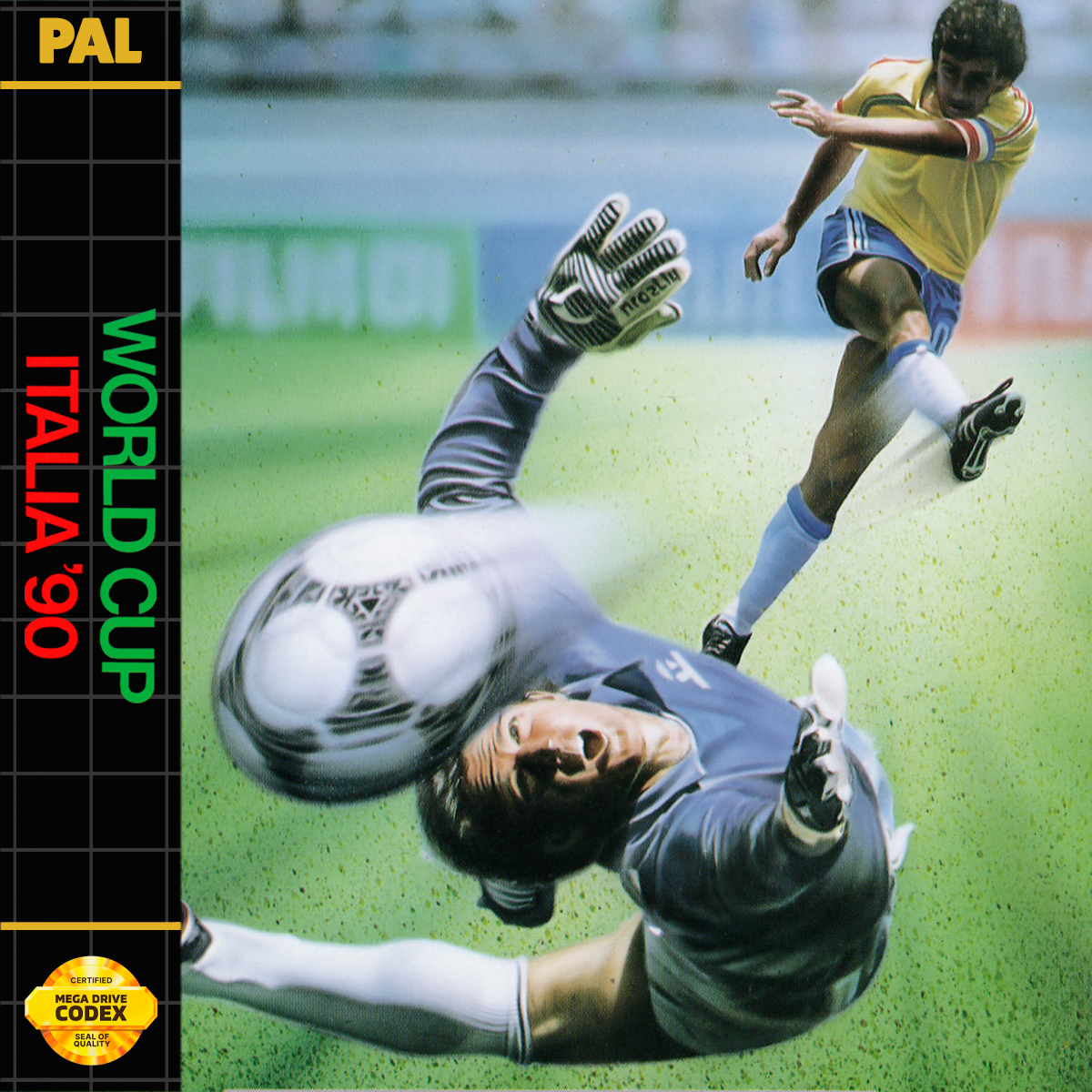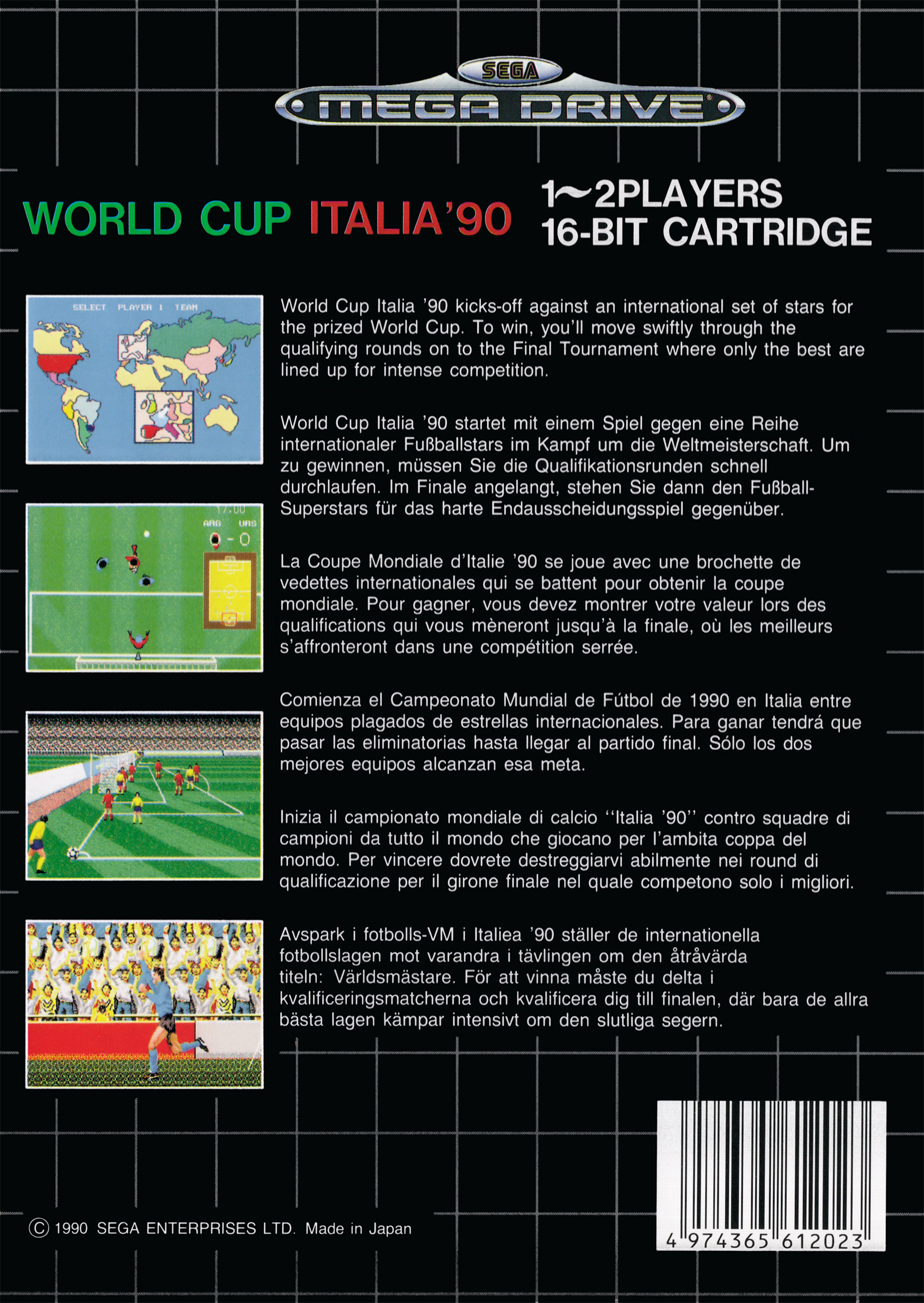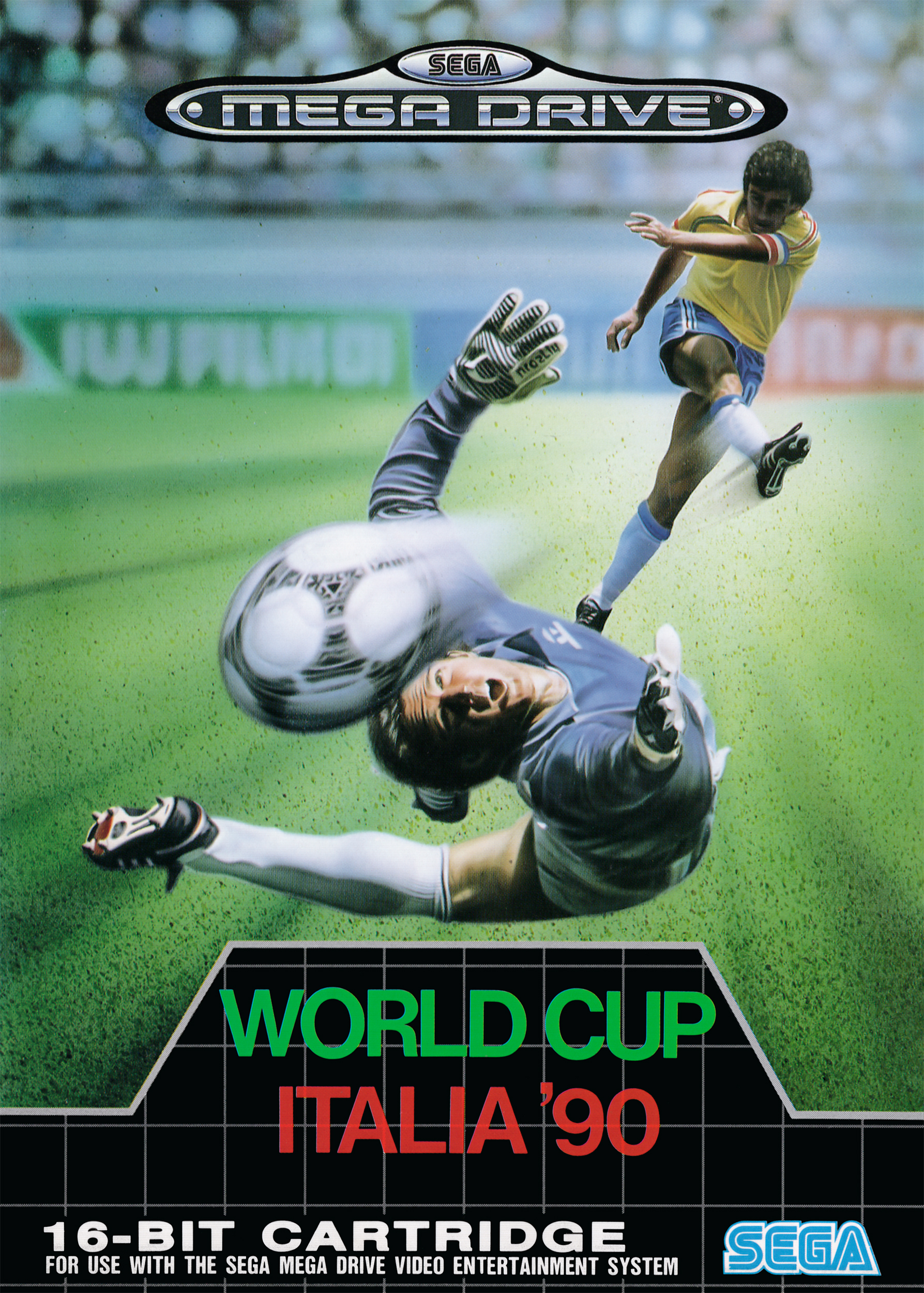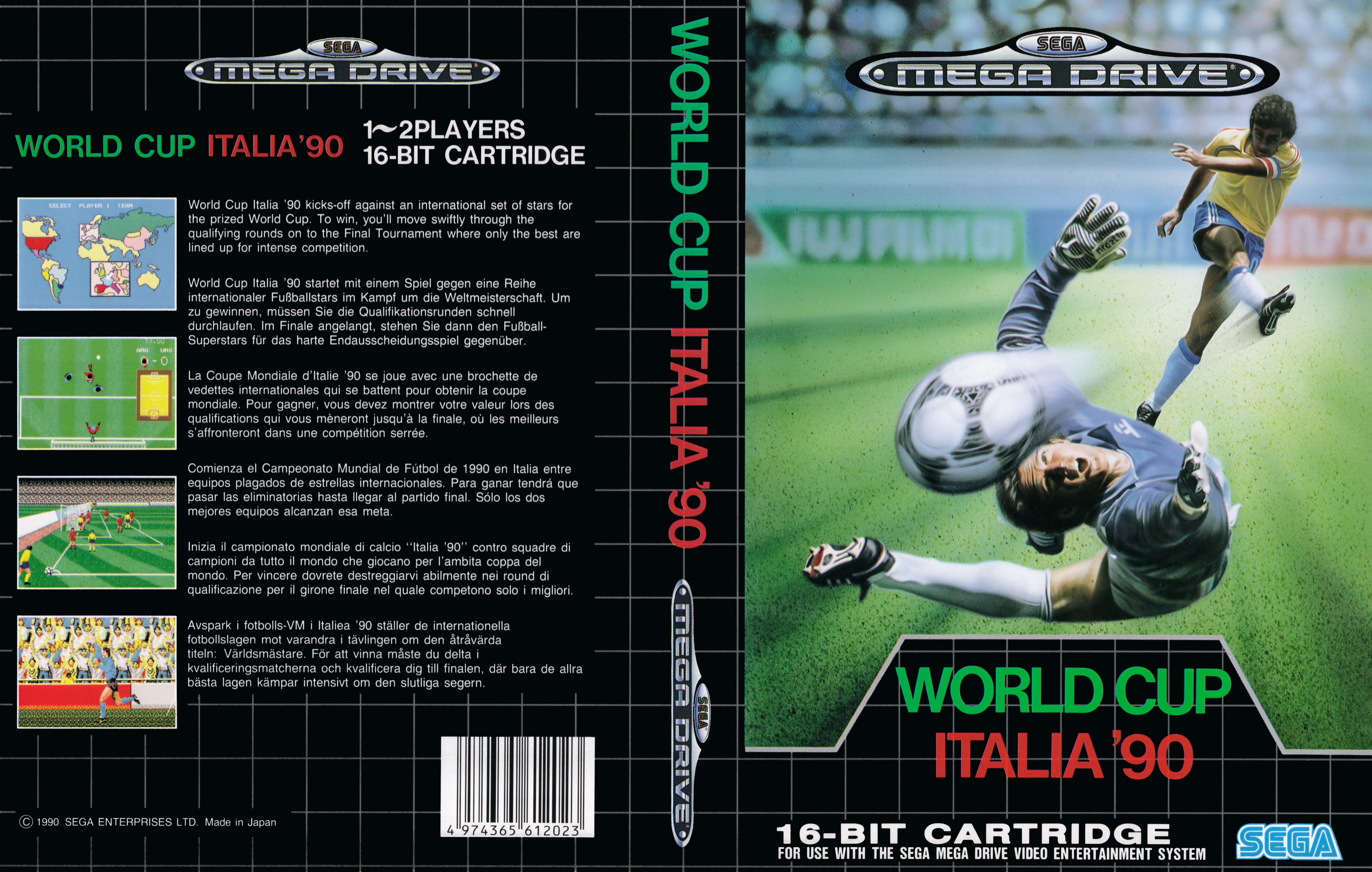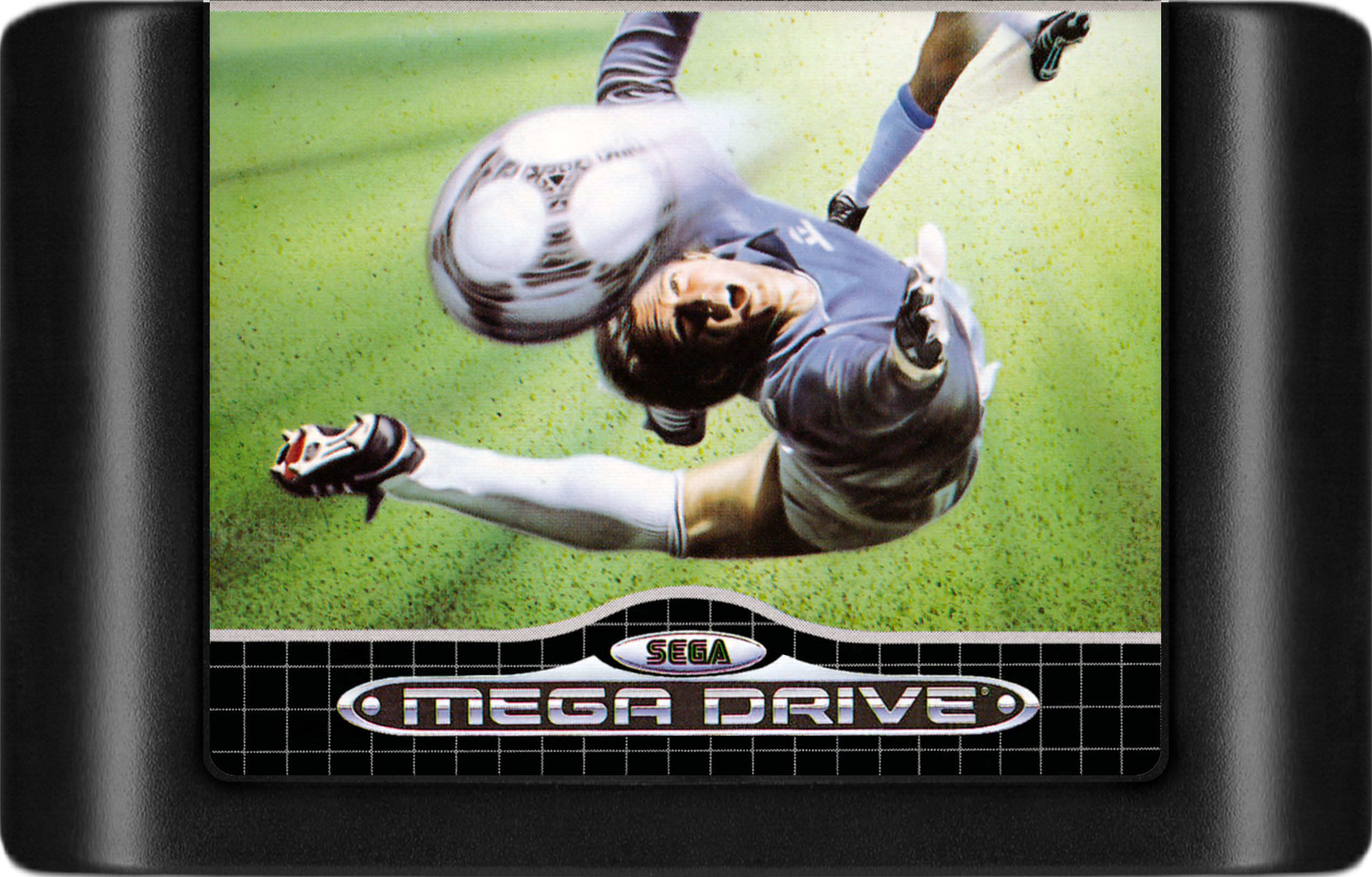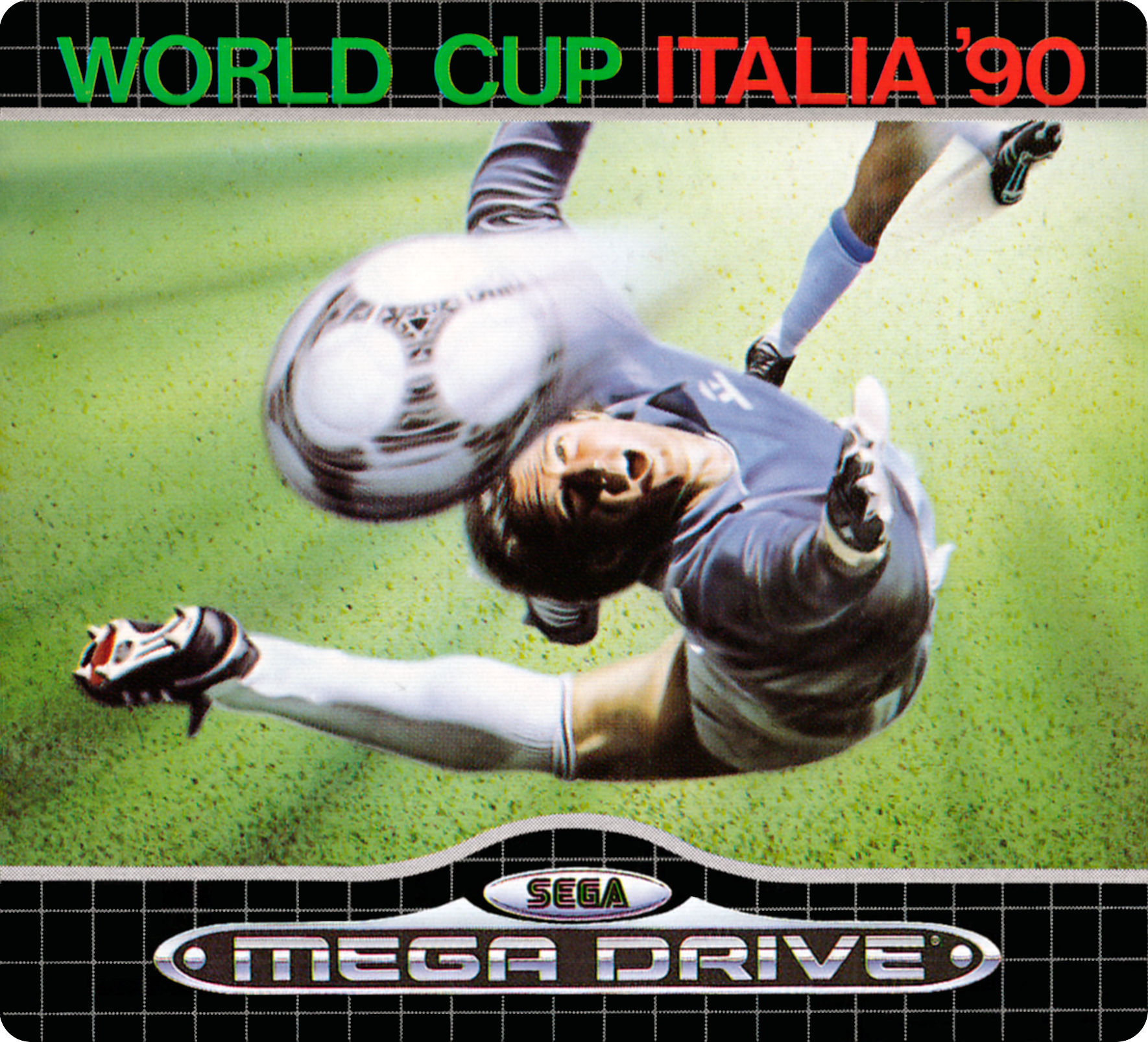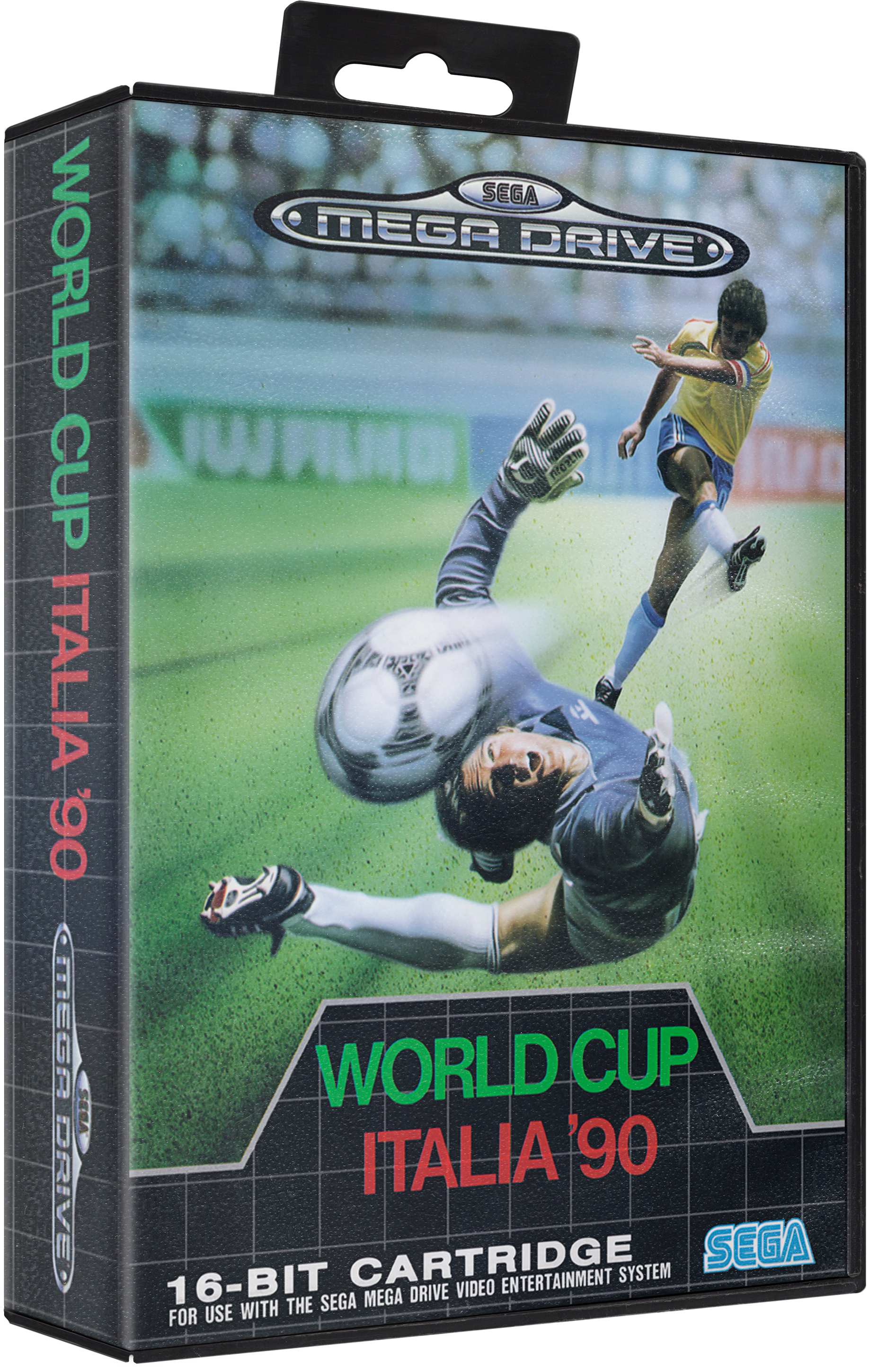
World Cup Italia '90
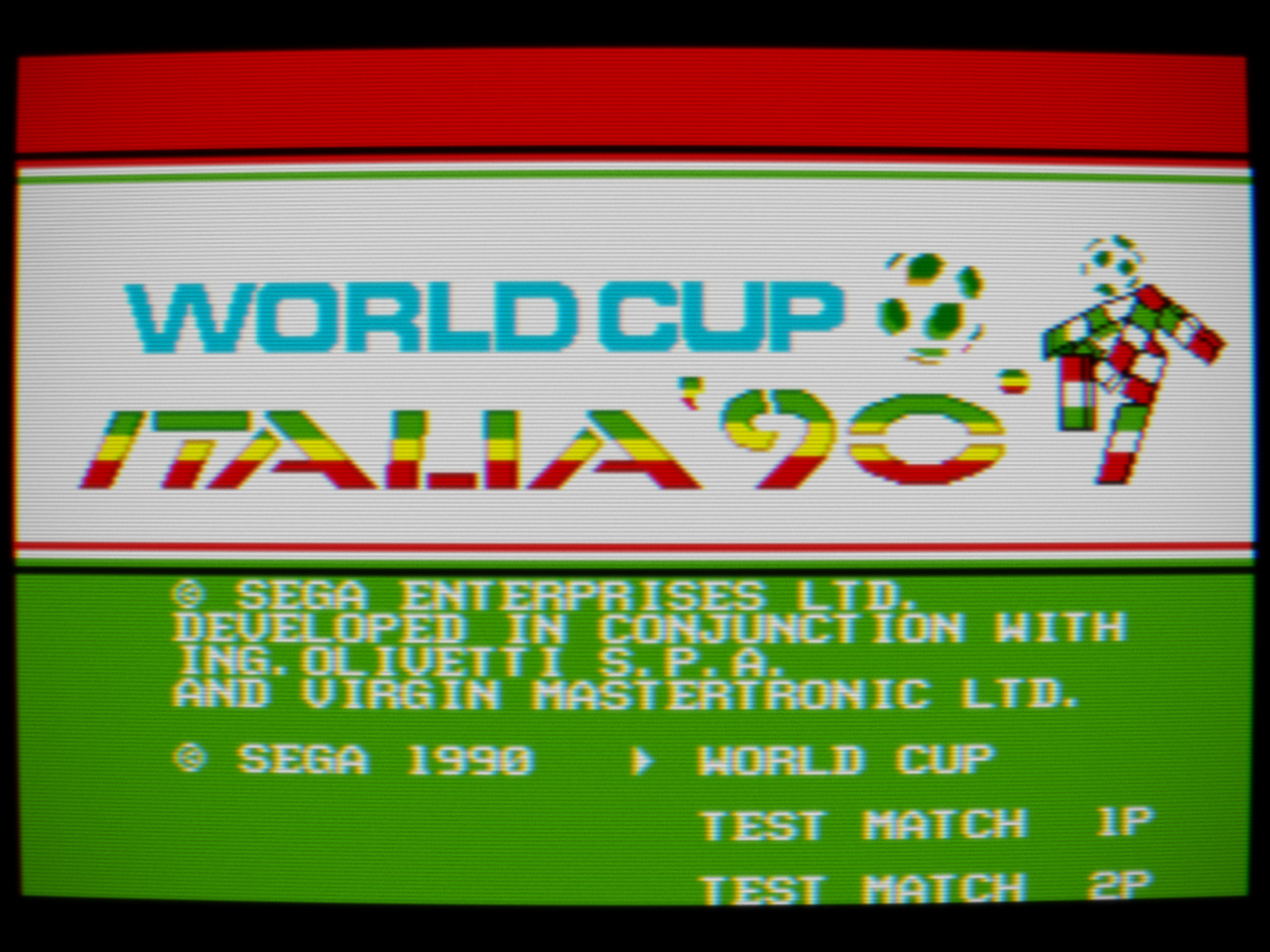
The tournament is over. West Germany have the trophy, Gazza has dried his eyes and the nation has gone back to moaning about the league. This is the moment Sega have picked to put the Italia '90 name on a Mega Drive cartridge.
Timing aside, football fans with a Mega Drive finally have a game to play. The question is whether it deserves the name on the box.
It does not.
Same game, new shirt
Anyone who follows the import scene will recognise this one. In Japan it goes by World Cup Soccer, and the American version is called World Championship Soccer. Line them up next to World Cup Italia '90 and the only difference is the title. Sega hold the official Italia '90 licence for Europe, so the European release gets the tournament's name. That is where the work stopped.
A good football game with a borrowed name would still be a good football game. The badge on this one tells you nothing about what is inside, and what is inside is not good.
Picking a side
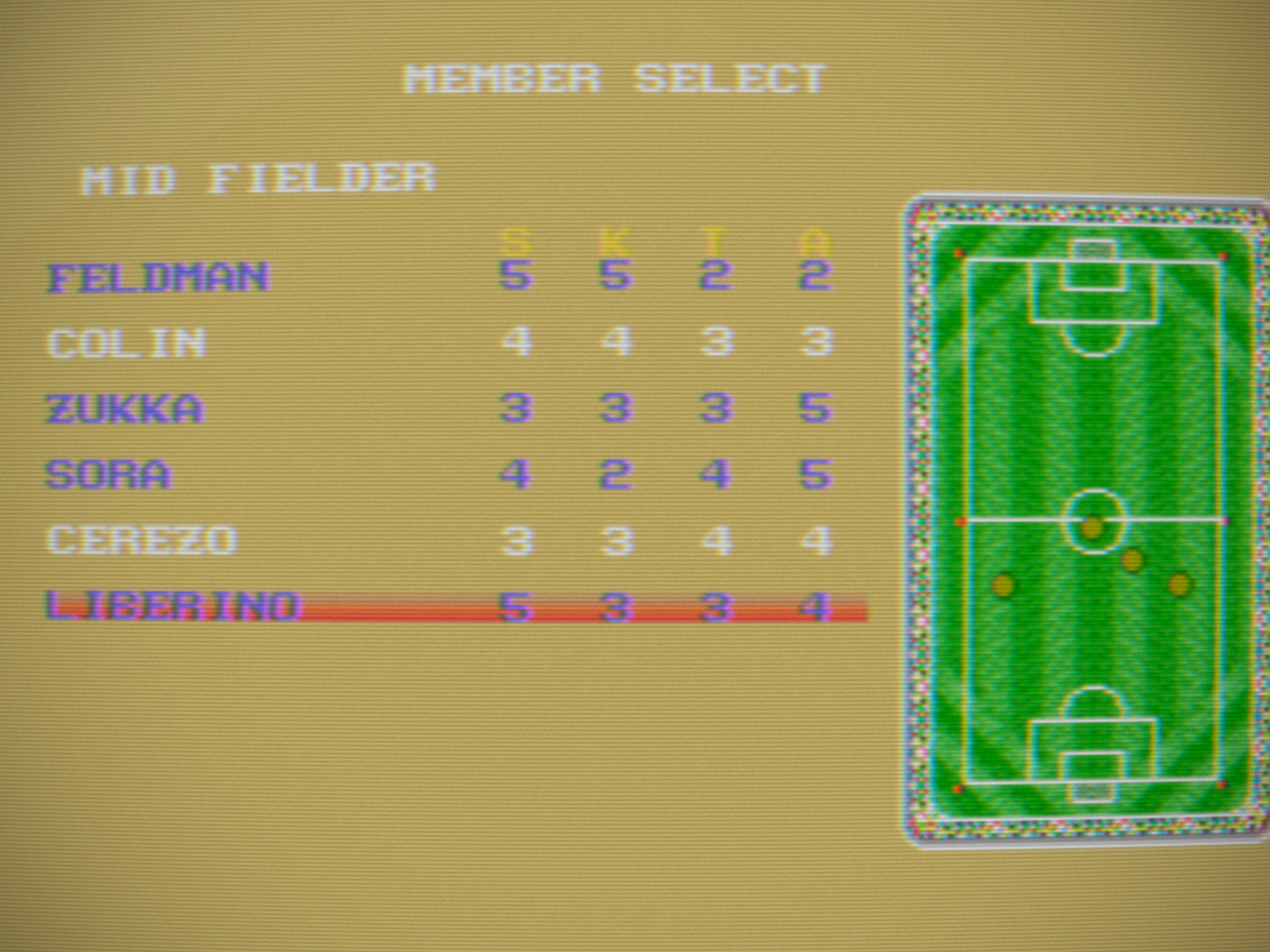
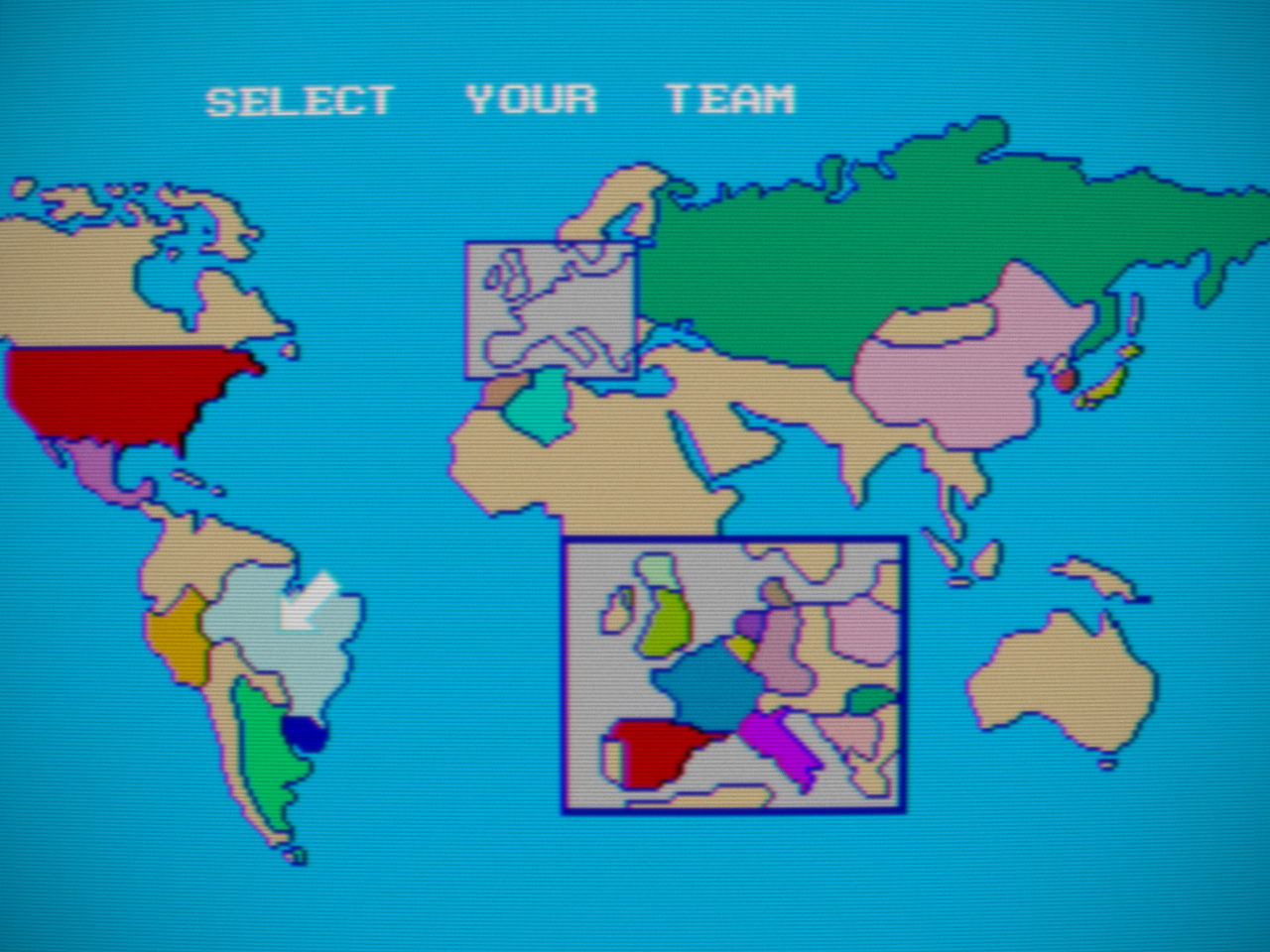
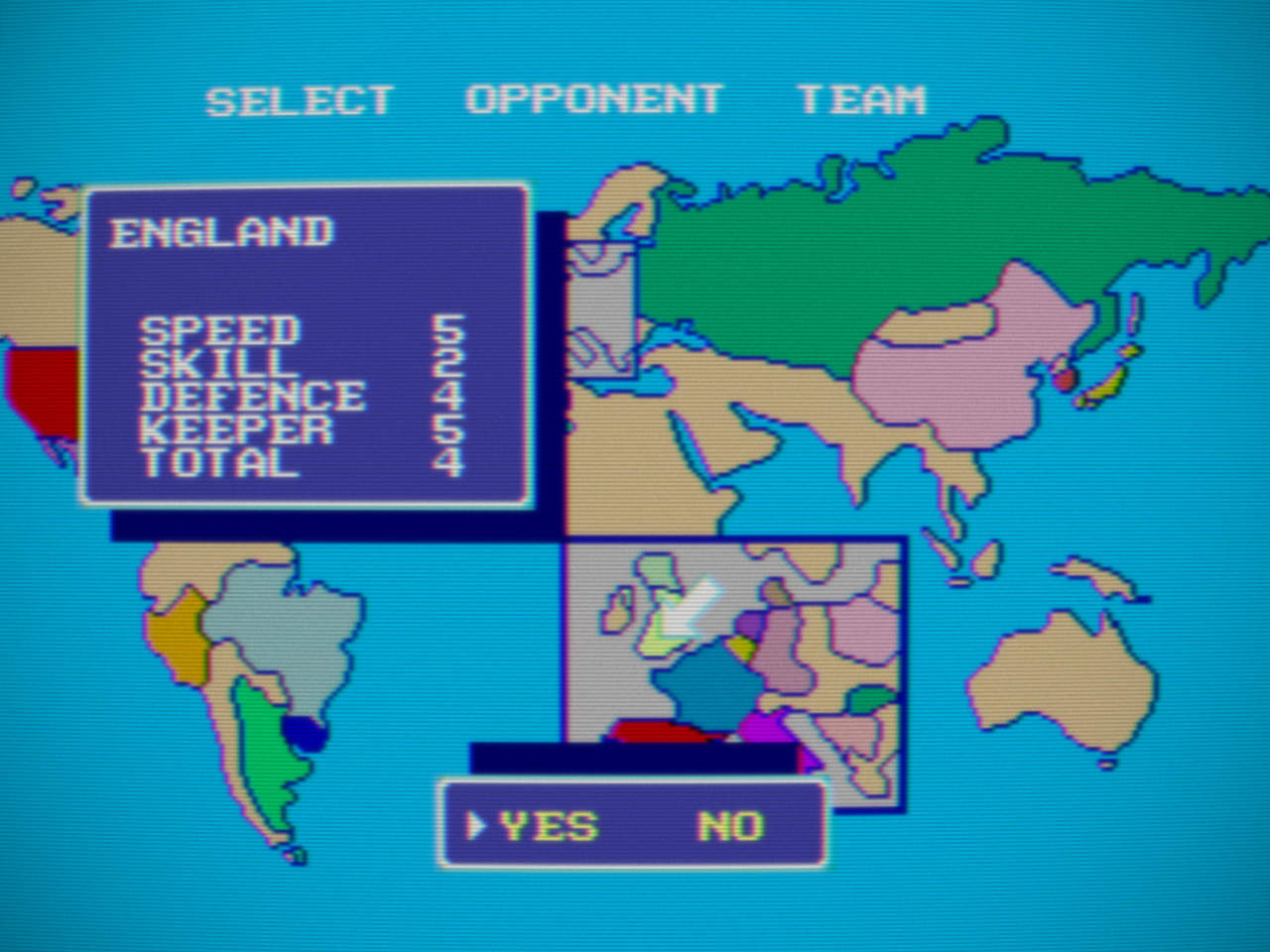
The setup is the best part of the package. You pick a country by moving a cursor across a map of the world, and each nation comes with ratings that match its reputation. Brazil are about as good as it gets. Japan and China are not. Choose a country and you pick your line-up from menus of goalkeepers, defenders, midfielders and attackers, each player with his own stats. Up front there are two places for four forwards, so two of them always sit on the bench.
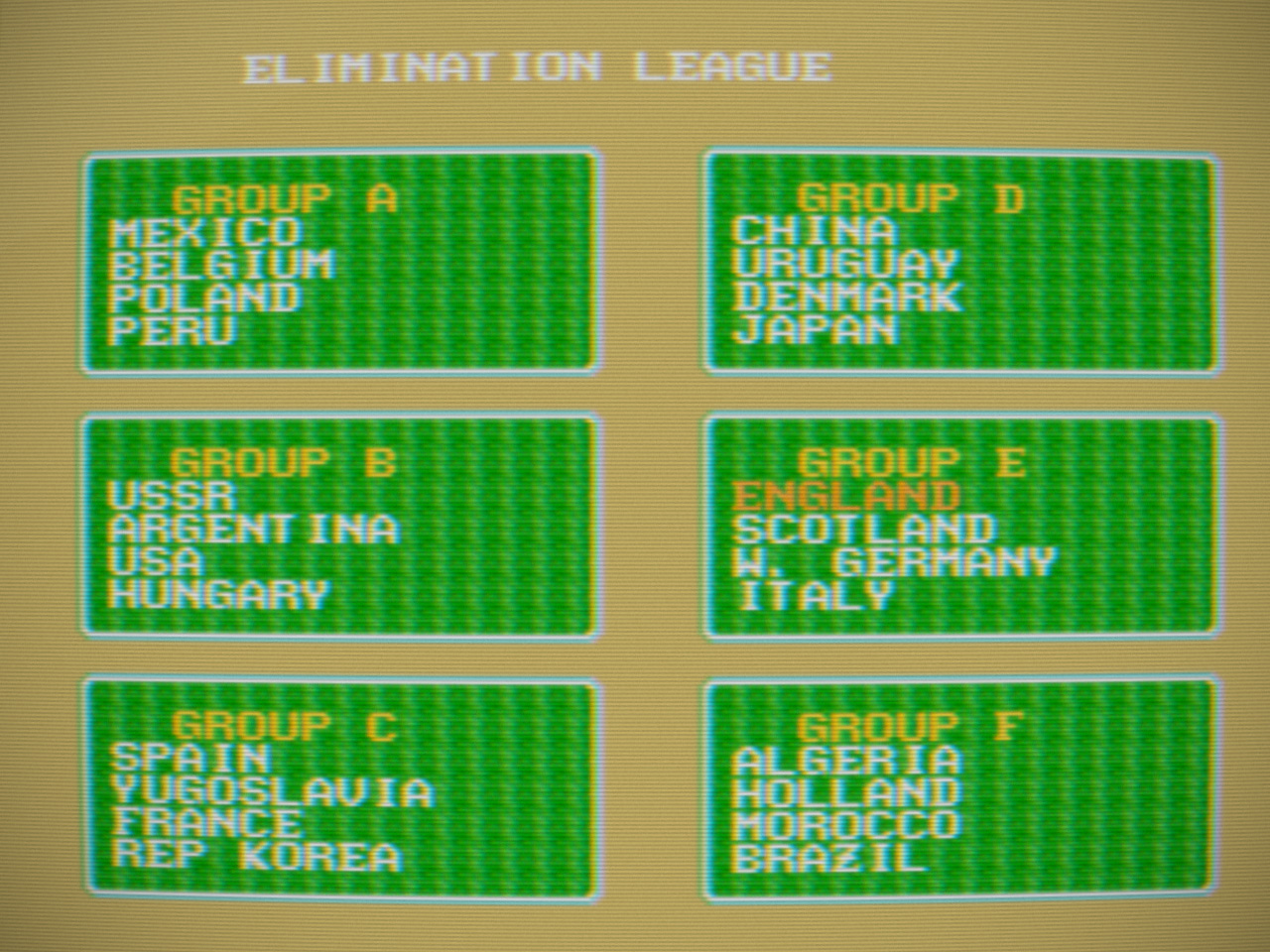
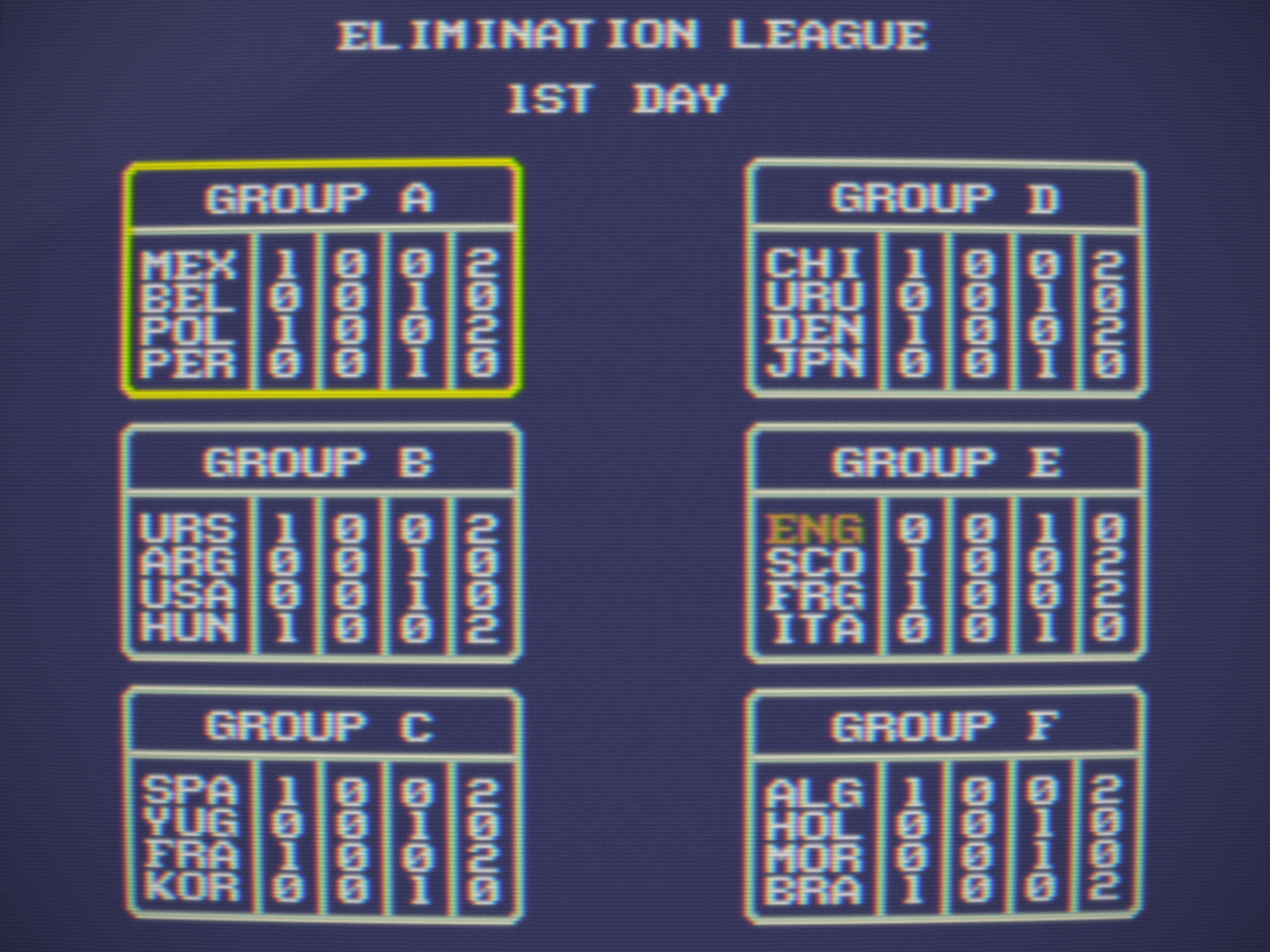
There are two ways to play. A friendly is one or two players, and you choose both sides. The World Cup mode is one player only, which is an odd decision for a game whose best feature is playing a mate. In the tournament you are drawn into a group with three random teams, and after the group stage every match is a knockout. Draw one of those and it goes to penalties.
On the pitch
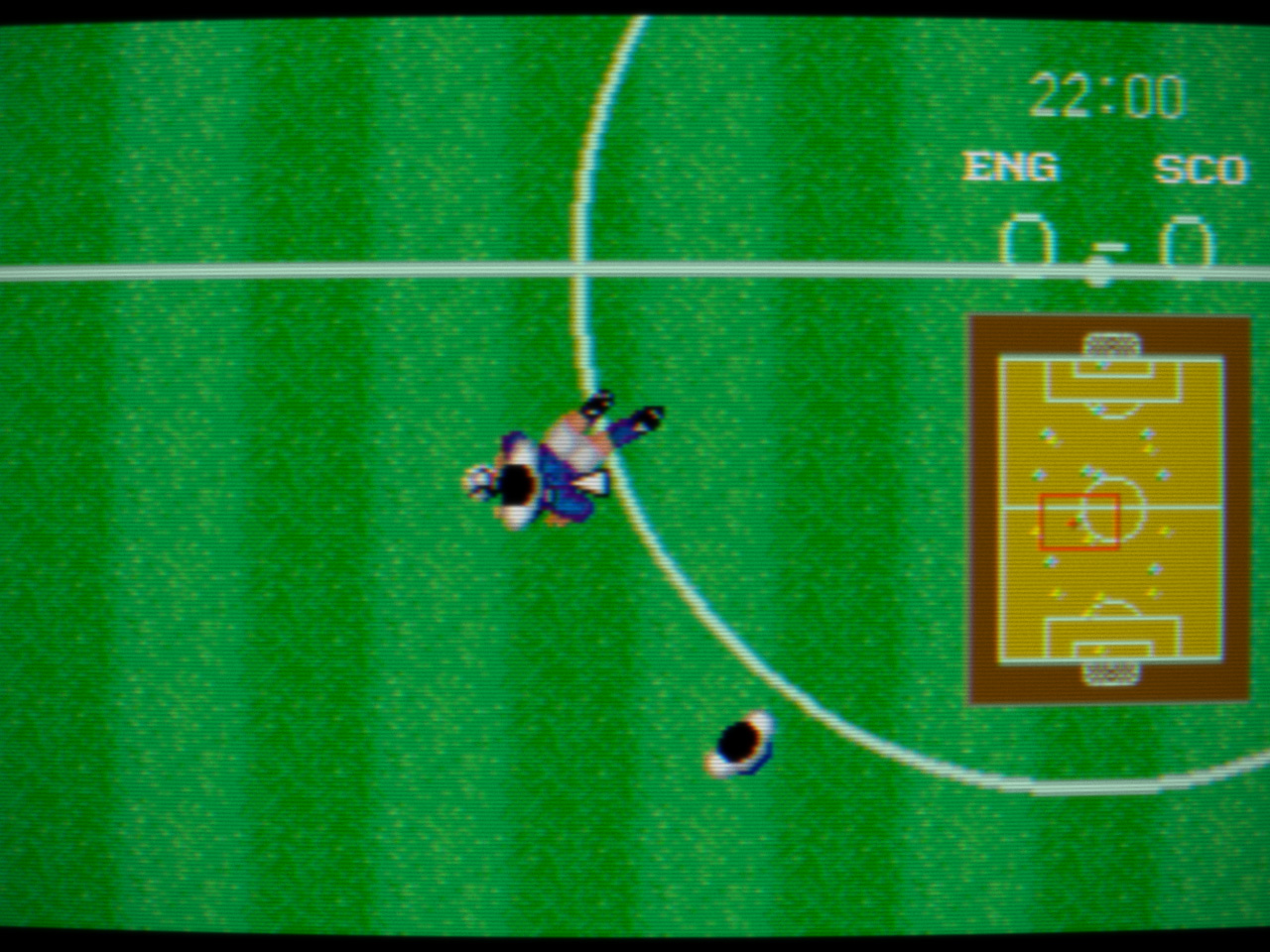
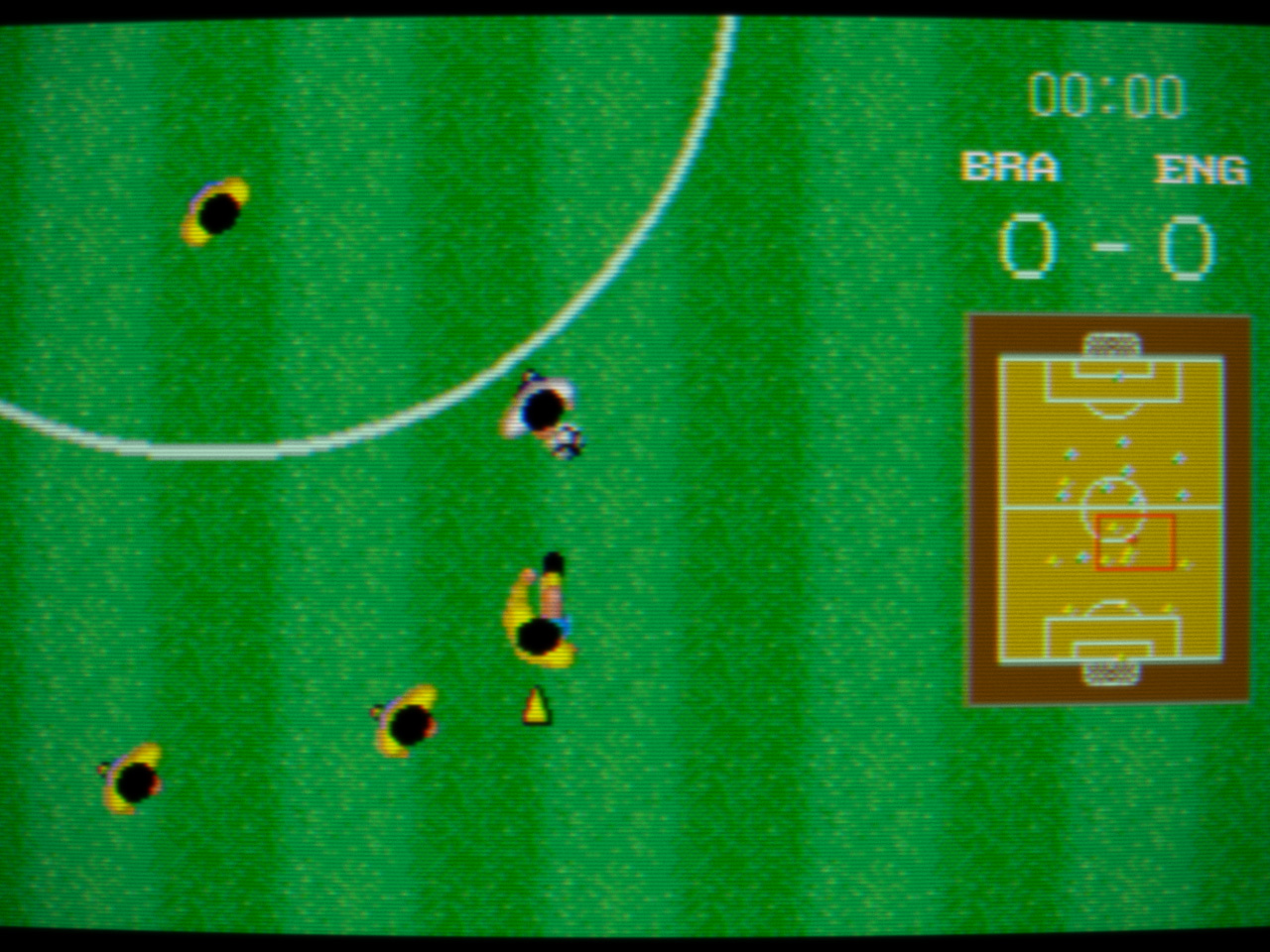
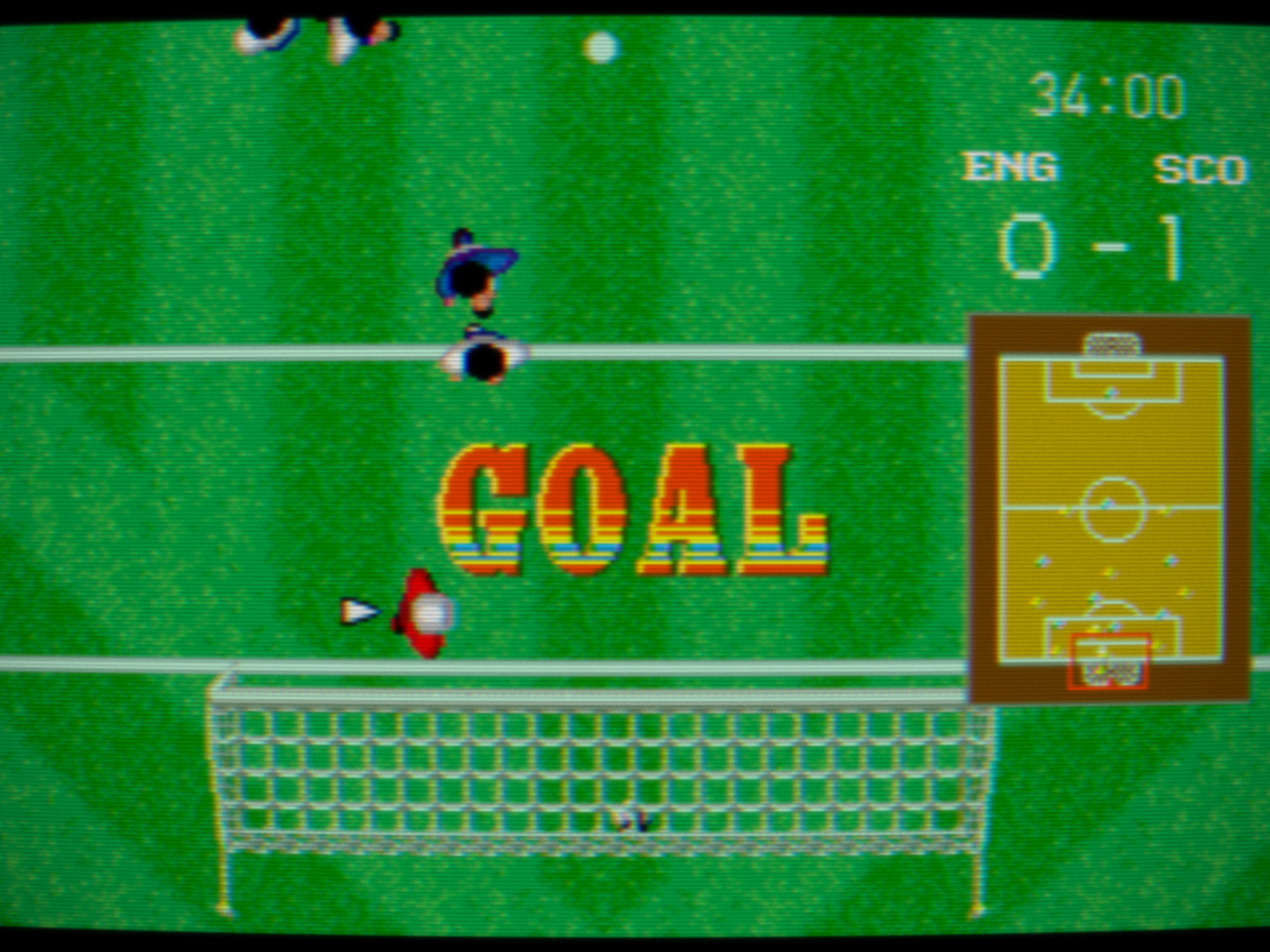
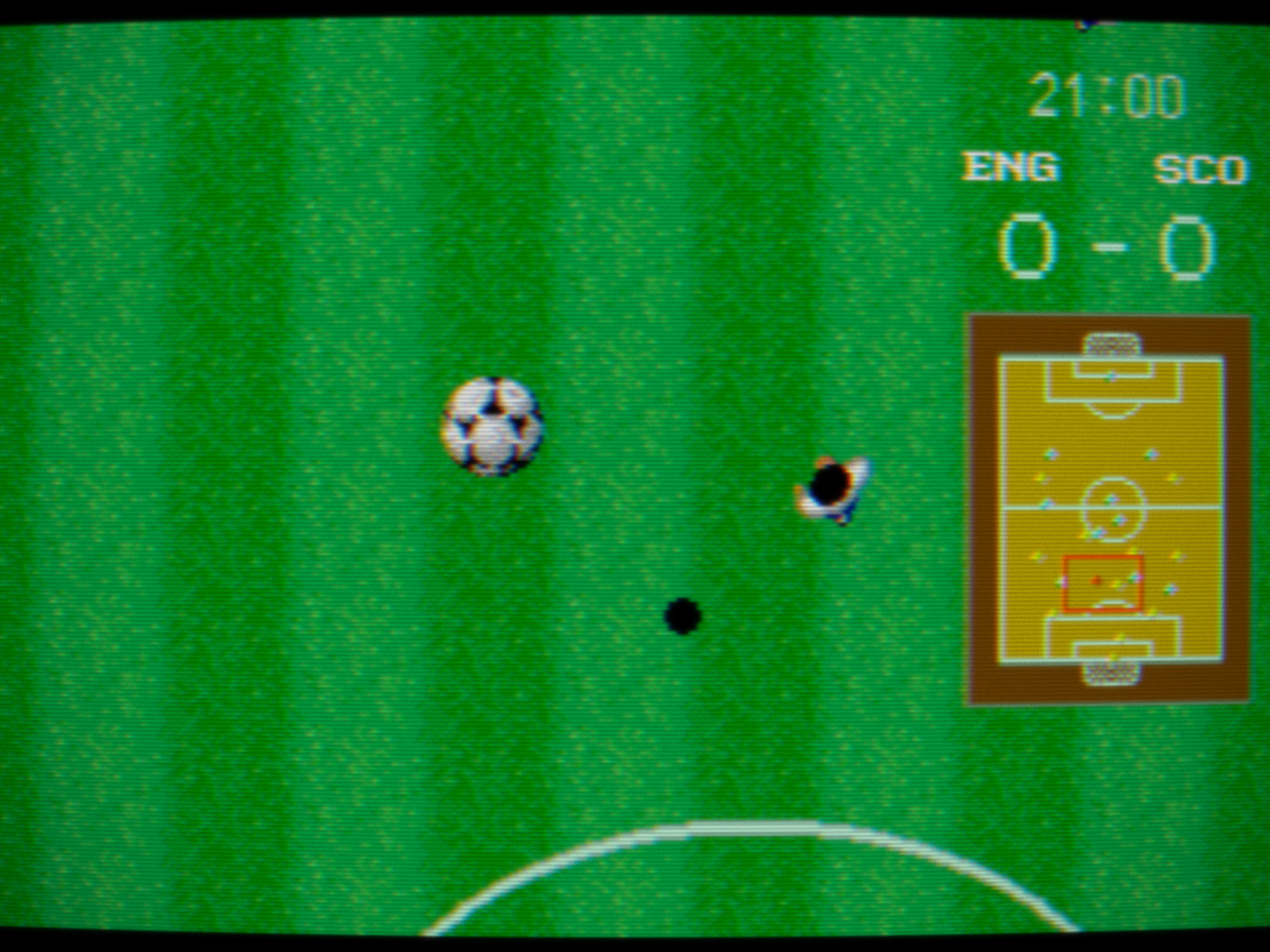
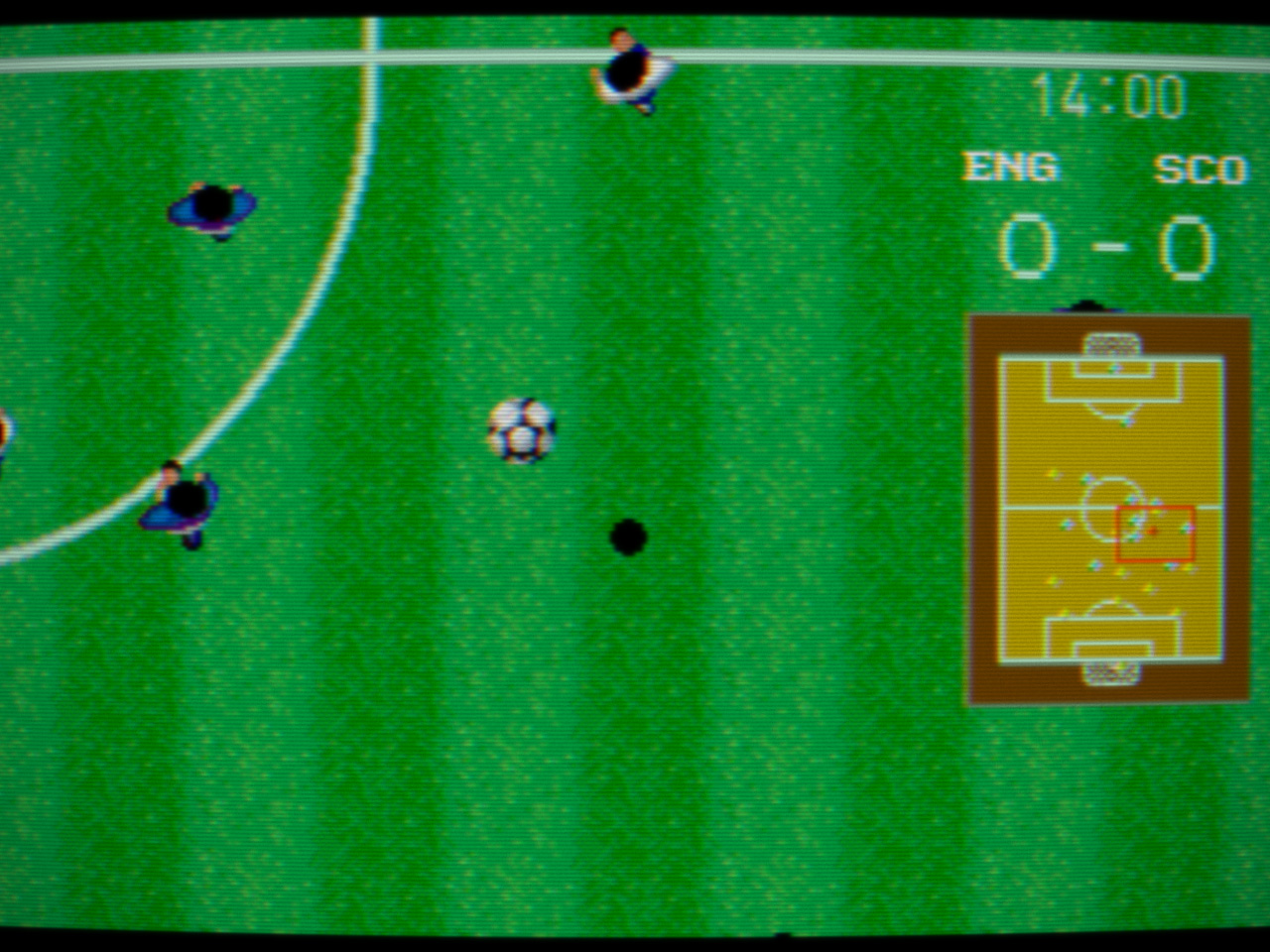
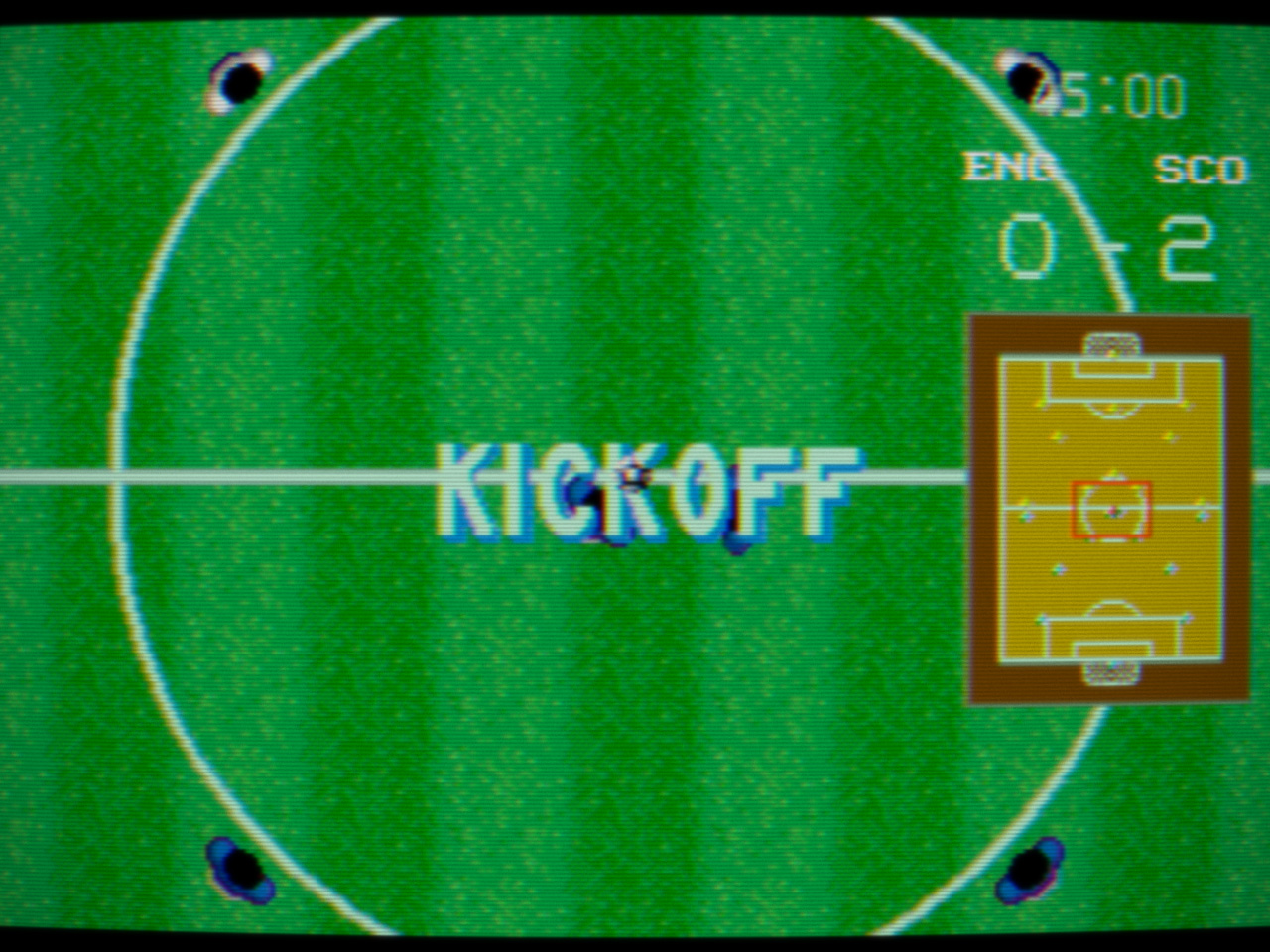
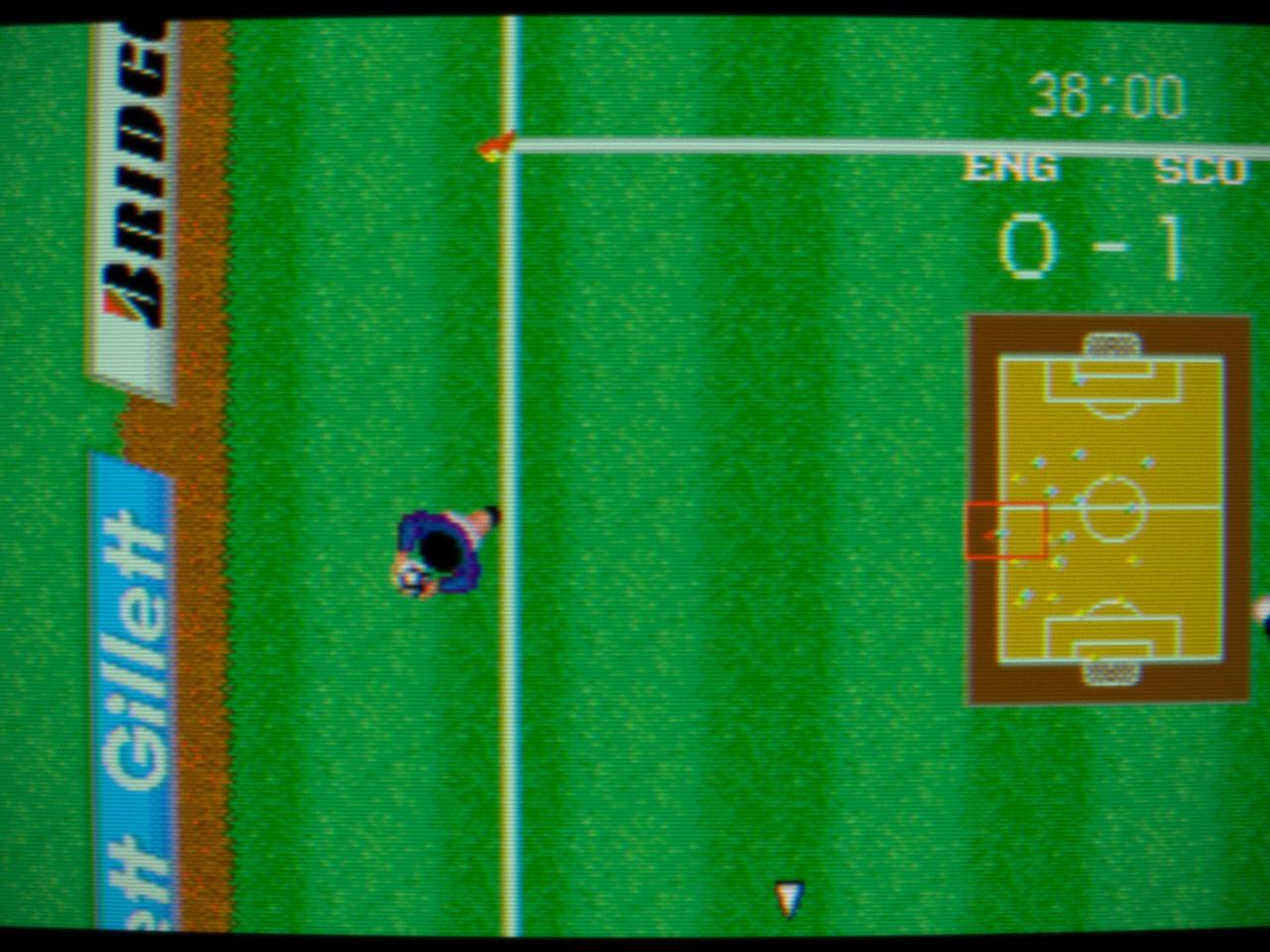
Matches are played from overhead, with the pitch scrolling around the ball and a small map in the corner showing where everyone is. A shoots, B plays a high pass and C plays a pass along the ground. Volleys, headers and overhead kicks come out of the same buttons when the ball is in the air. Dribbling is automatic, so you steer and the player keeps the ball at his feet.
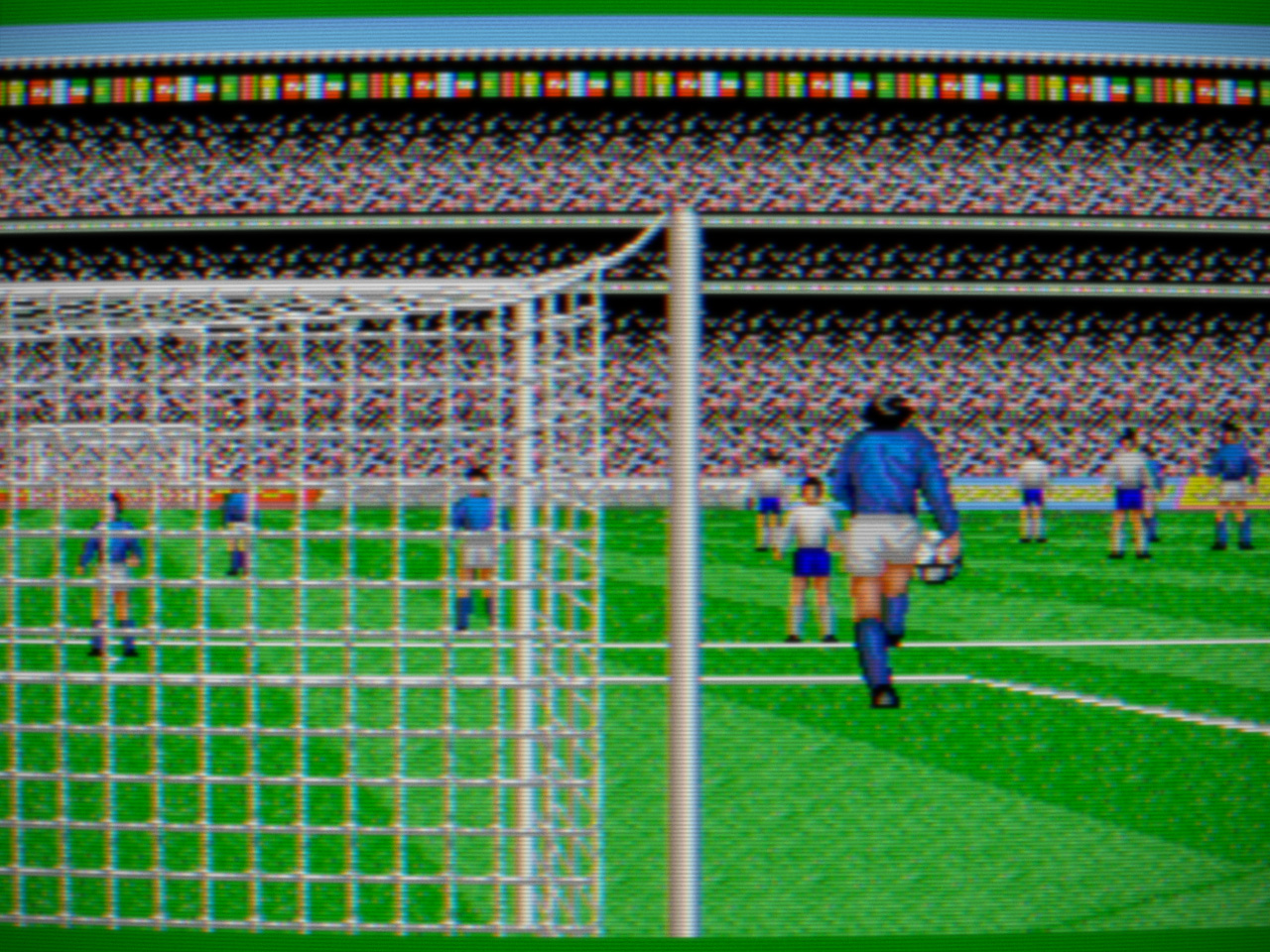
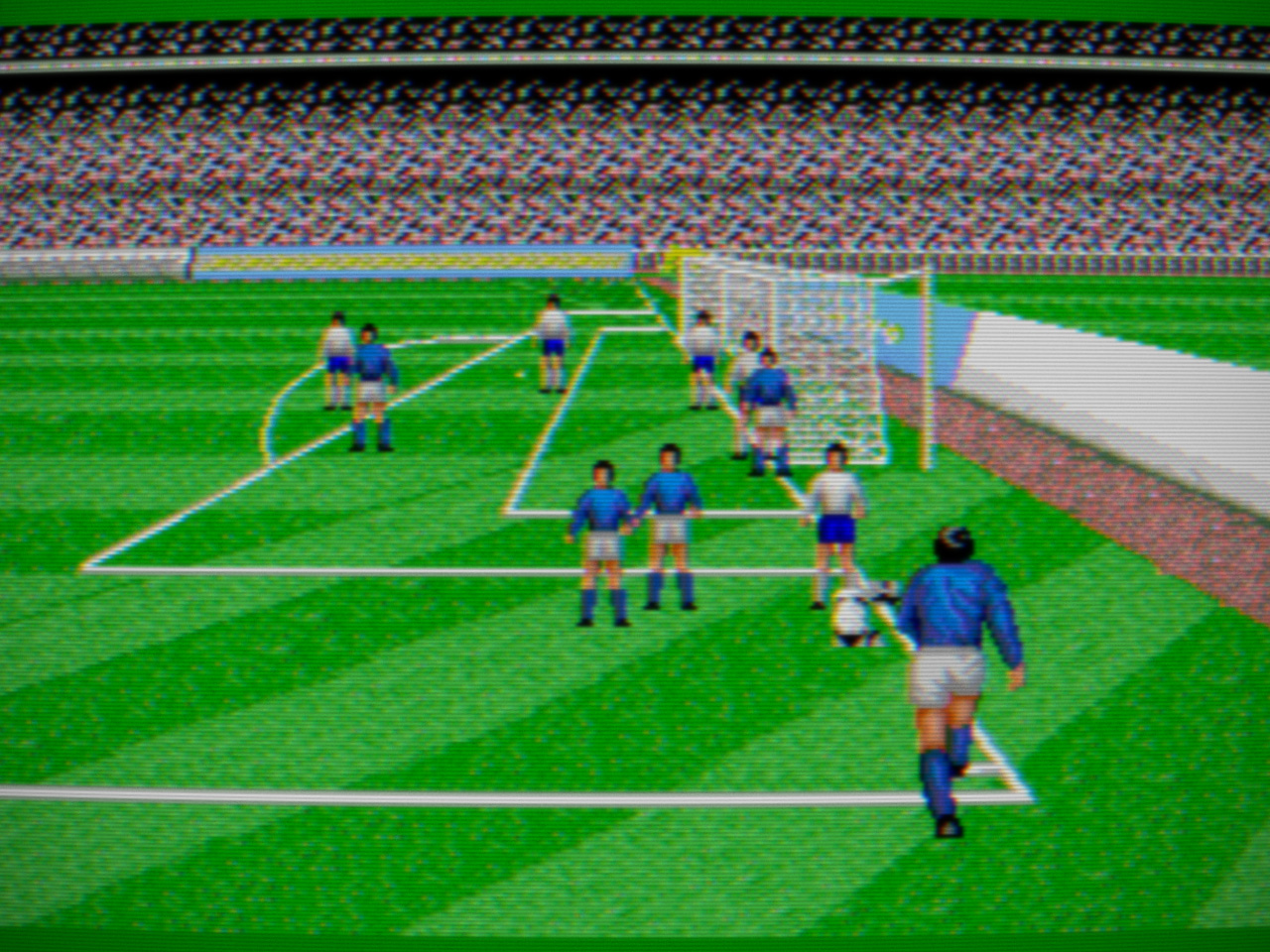
Penalties, corners and goal kicks switch to a view from behind the goal, with the net, the stands and the crowd drawn in some detail. These set pieces are the best-looking moments in the game, and the first time a corner swings in from that angle it is impressive.
Then play restarts, you are back up in the sky and the speed takes over. The ball pings around the screen fast enough that the first few matches are a blur. Win the ball and an opponent is on you within a second, so there is no time to look up, pick a pass or build anything. Matches turn into long balls and scrambles.
No fouls
There are no fouls. None. Without the ball, A becomes a sliding tackle, and you can fly in from behind anywhere on the pitch, including inside your own penalty area. The referee waves play on every time. There are throw-ins, corners and goal kicks, but no free kicks and no penalties during play.
So the best defensive tactic is to slide at everybody. The computer does the same to you. Add automatic dribbling and the speed, and a match settles into a loop: hit it forward, get scythed down, slide in to win it back, hit it forward again. The game does not always hand you control of the nearest player, which makes the scrambles worse.
Twelve minutes of the same thing
That loop would be tolerable in short bursts. It does not come in short bursts. Each half lasts around six minutes, and there is no option to shorten them. Six minutes of the same three moves feels like twenty. By the second half you have seen everything the match has to offer, and there are still six minutes to play.
The tournament makes it worse. Three group matches, then a quarter-final, a semi-final and a final, each one twelve minutes long before any penalties. That is more than an hour of slide tackles and long balls to lift one trophy, and the computer sides are tough enough that you should expect to replay parts of it.
Halve the length of each half and this would be a different game. The same thin football over three minutes a half would be a quick, daft kickabout you could play over and over. Stretched to six, it is a chore. A menu option would have fixed it, and Sega did not include one.
Sound
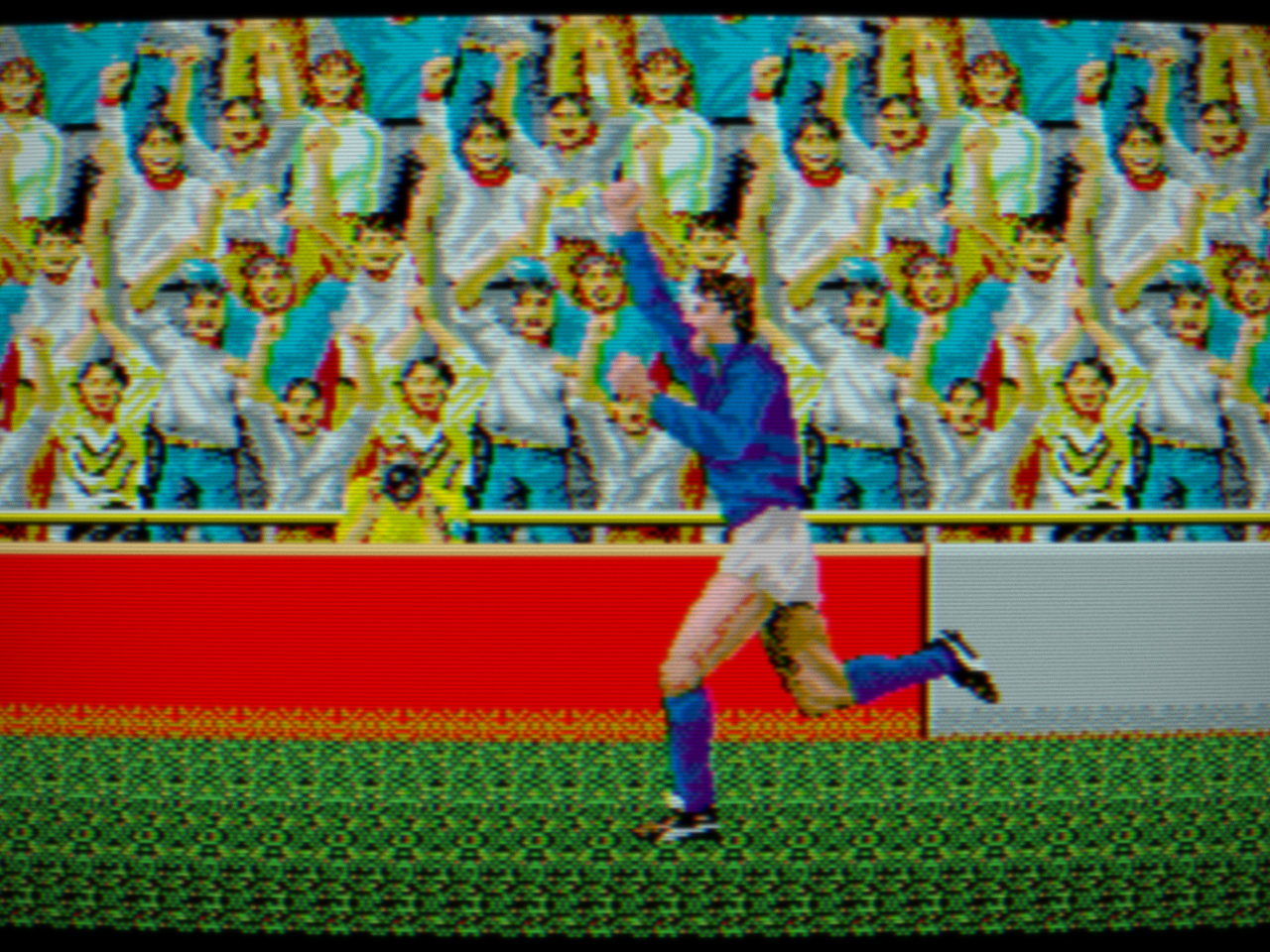
The audio is sparse. There is no crowd noise at all. When you score, a single voice shouts "GOAL!", and the sample is so muffled it sounds as though it was recorded through a pillow. Kicks sound like a boot hitting a flat ball and the whistle is feeble.
The rest is music. Three background tracks by Keisuke Tsukahara play during matches. They are competent, and with no crowd to fill the gaps they are doing all the work of making the stadium feel occupied.
The Verdict
World Cup Italia '90 is a Mega Drive football game, and that is the best thing about it. The team selection is well thought out, the set-piece views look good and two players can have a laugh with it for an evening.
Everything else lets it down. The speed leaves no room for skill. The absence of fouls turns every match into a slide-tackling contest. The audio is little more than a muffled shout and some music. And each match runs to twelve minutes with no way to shorten it, which takes a thin game and stretches it until it snaps.
It carries the official name of the biggest football tournament in the world, and it plays like a rushed job. Unless you need football on your Mega Drive tonight, wait for something better.
In Hindsight
When World Cup Italia '90 arrived it was the only football game on the Mega Drive. Magazines had nothing on the console to measure it against, so they rated it against the idea of football at home, and plenty of them liked what they saw. That did not last. As soon as better football games reached the machine, the same magazines revised their opinion of this one downward, and its reputation has not recovered.
The cartridge is also a clear example of one game wearing several names. It was World Cup Soccer in Japan, World Championship Soccer in America and World Cup Italia '90 in Europe, where it carried the official tournament licence. It then kept turning up. It appeared on Mega Games I, Mega Games 6, Mega Games 6 Vol. 2 and Mega 6 Vol. 3, the last of which renamed it again as Sega Soccer. That makes four names for one game.
The compilation run put it in front of owners who never bought it on its own, and for many UK players it was the first football game they played on the machine.
Mega Drive football improved a great deal in the years that followed, and the games that came later make this one look thin. The Codex keeps it as the starting point, and as a record of how far the genre on this machine had to travel.
Magazine scores
- Complete Guide to ConsolesIssue 183%
- Computer and Video GamesIssue 9583%
- Game ZoneIssue 12/6
- Mean Machines SEGAIssue 164%
- MegaIssue 120%
- Mega Drive Advanced GamingIssue 455%
- Mega Gold35%
- Mega MachinesIssue 159%
- Mega PowerIssue 18/10
- MegaTechIssue 164%
- RazeIssue 582%
- SEGA ForceIssue 862%
- SEGA Force MegaIssue 159%
- SEGA PowerIssue 1645%
- SEGA ProIssue 687%
- SEGA Pro - The A-Z of SEGA Games82%
- SEGA ZoneIssue 1739%