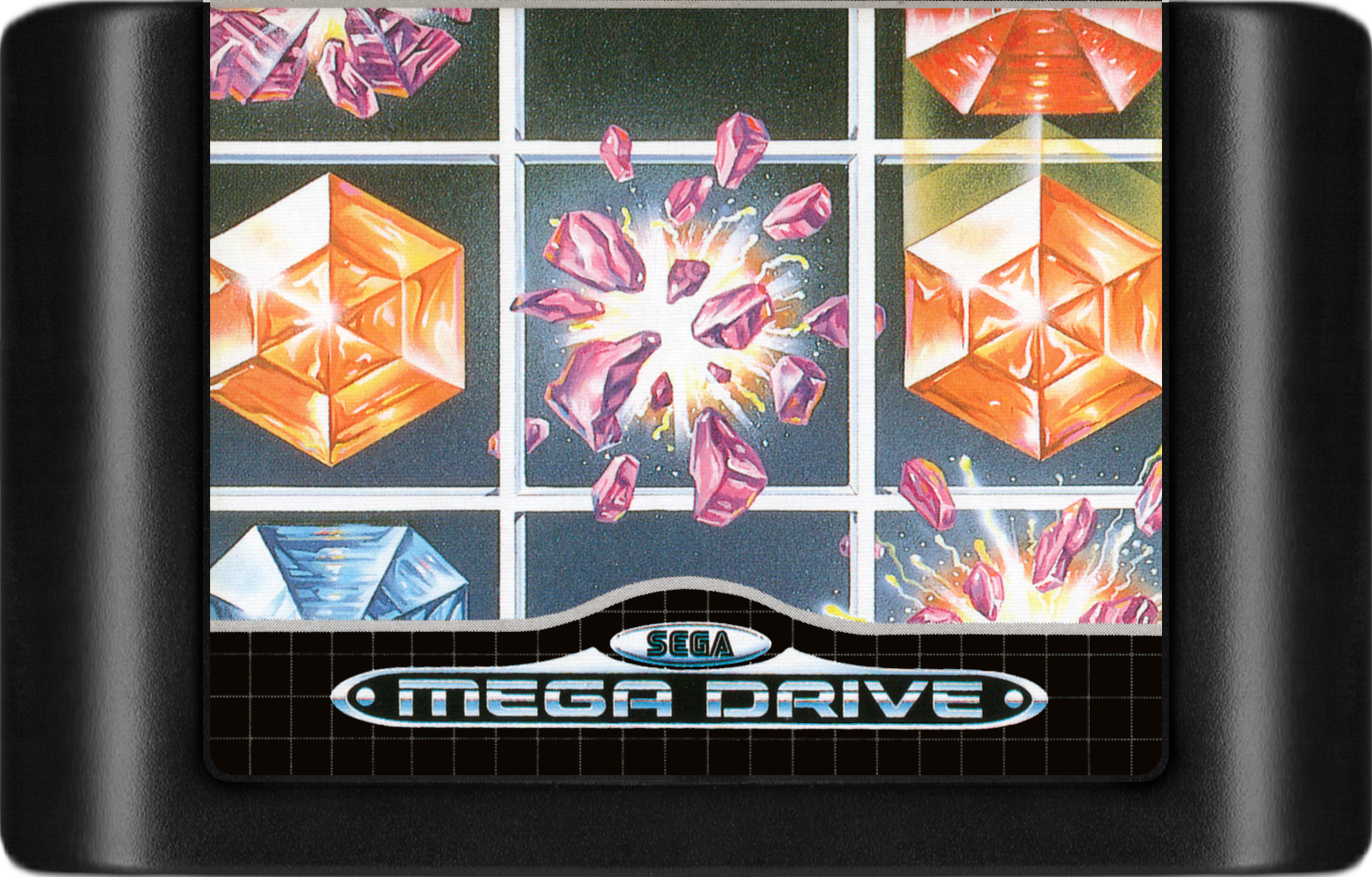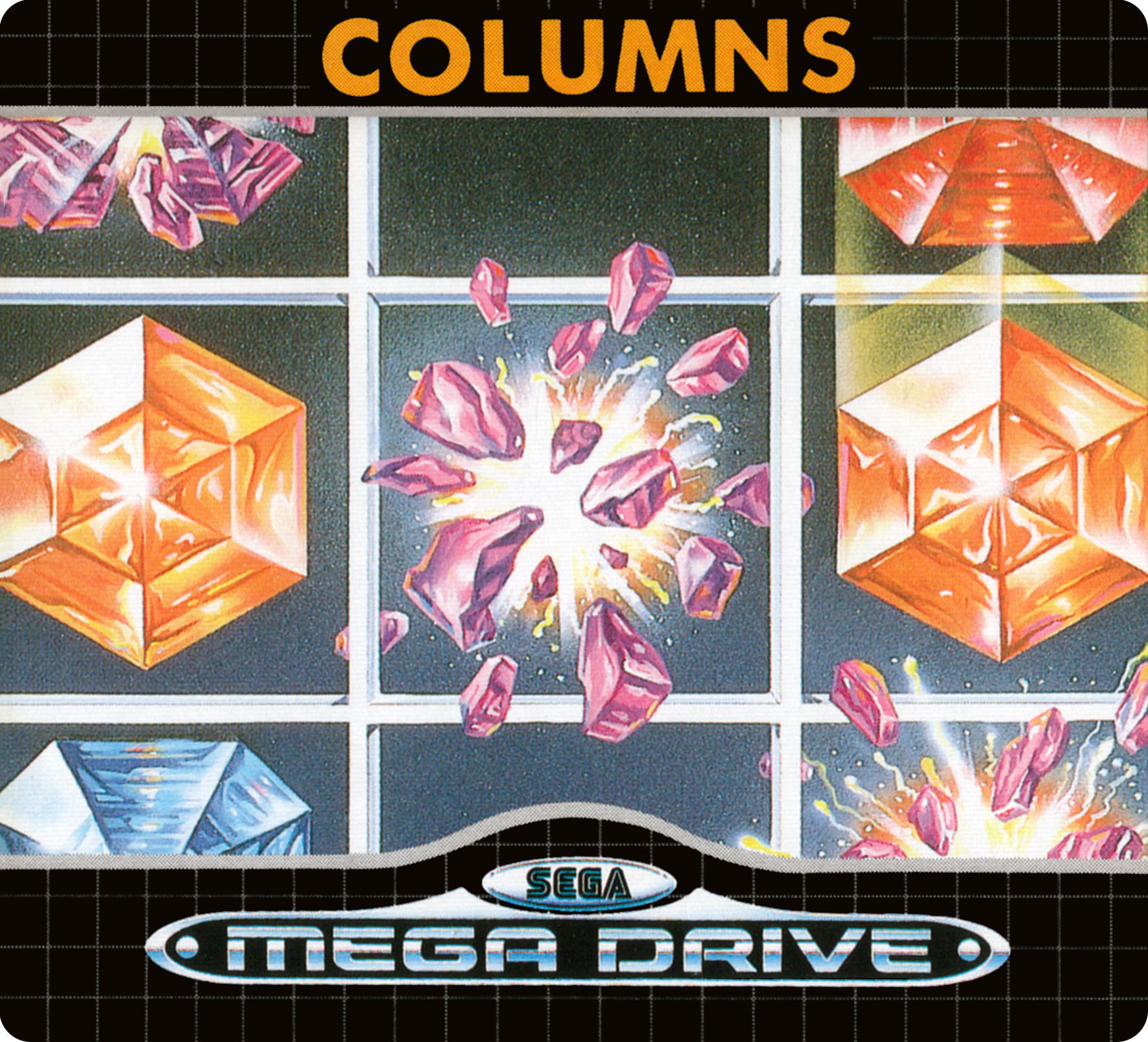
Columns
Codex Essential — Silver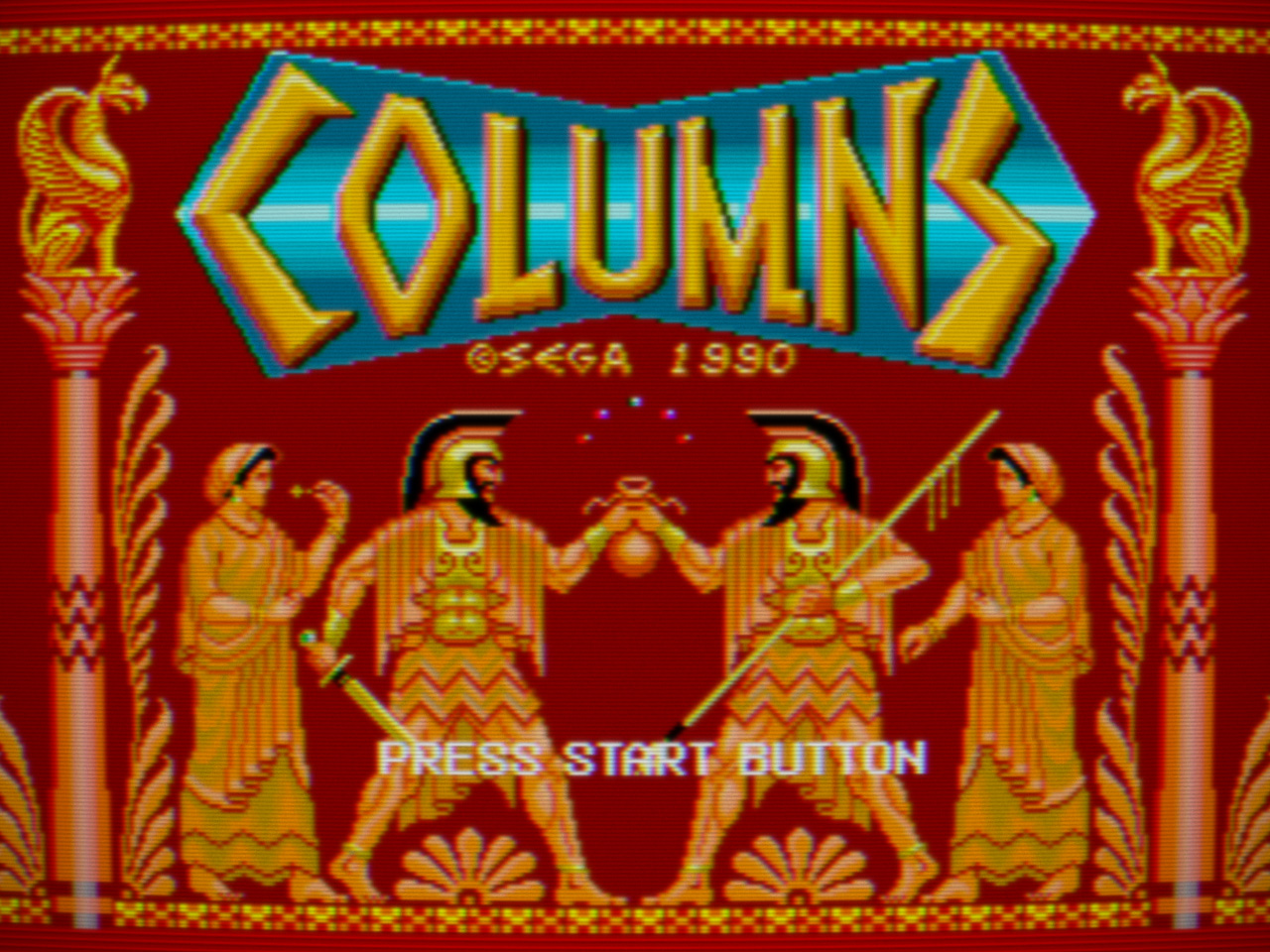
There is a falling-block puzzle game on every format going. Tetris has turned up on so many machines that it is harder to find a computer without it than with it, and the copycats have followed in their dozens. So when Sega wheel out a conversion of their own coin-op in which coloured shapes drop into a well and you have to arrange them before the well fills, the first reaction is a weary sigh.
Hold the sigh. Columns borrows the shape of Tetris and then changes the one thing that matters, which is what you are looking for when the pieces land. That change turns it into a different game, and a more vicious one. Master System owners have had a version to play already. Mega Drive owners get the arcade game in the house.
Three jewels at a time
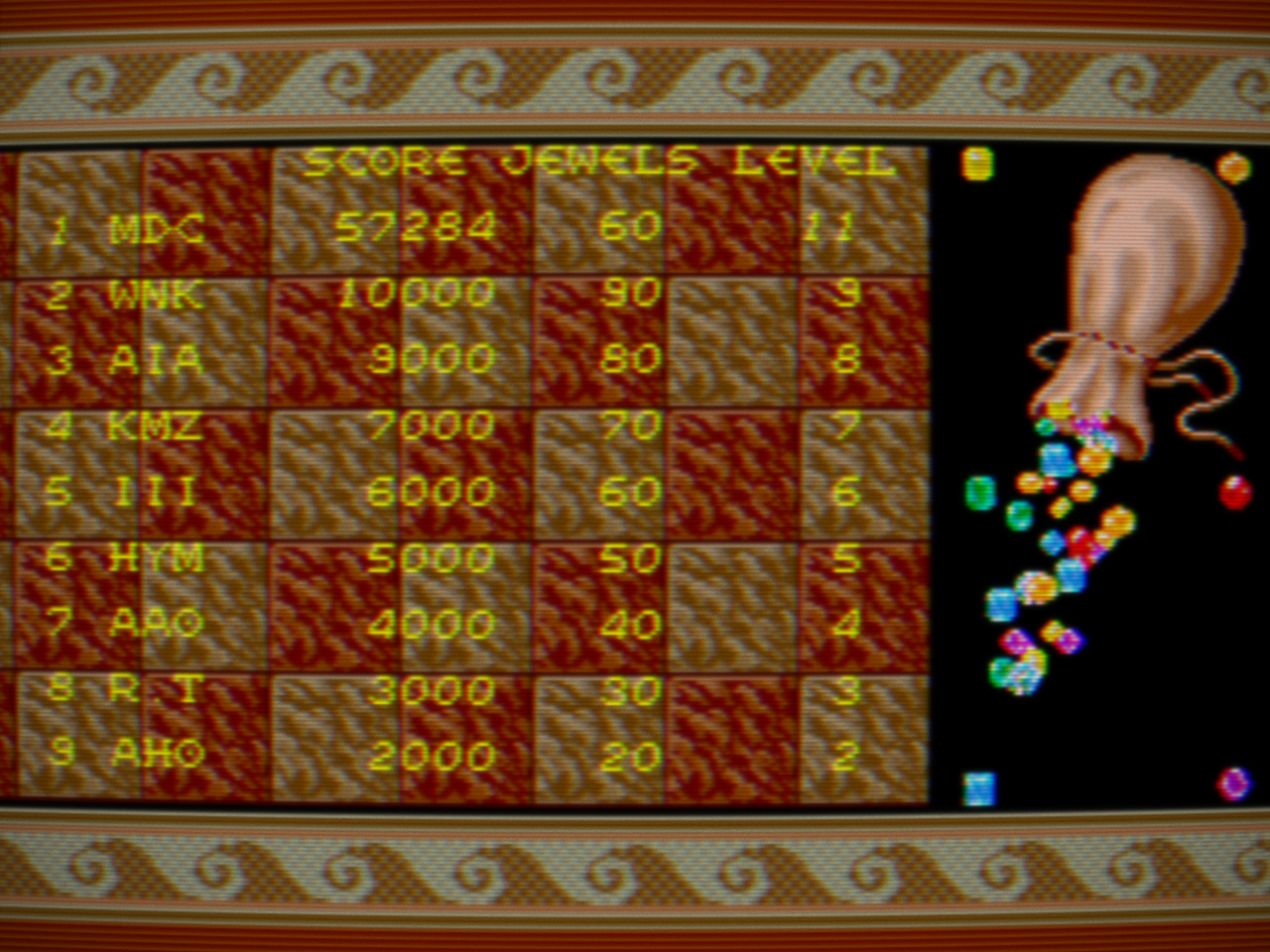
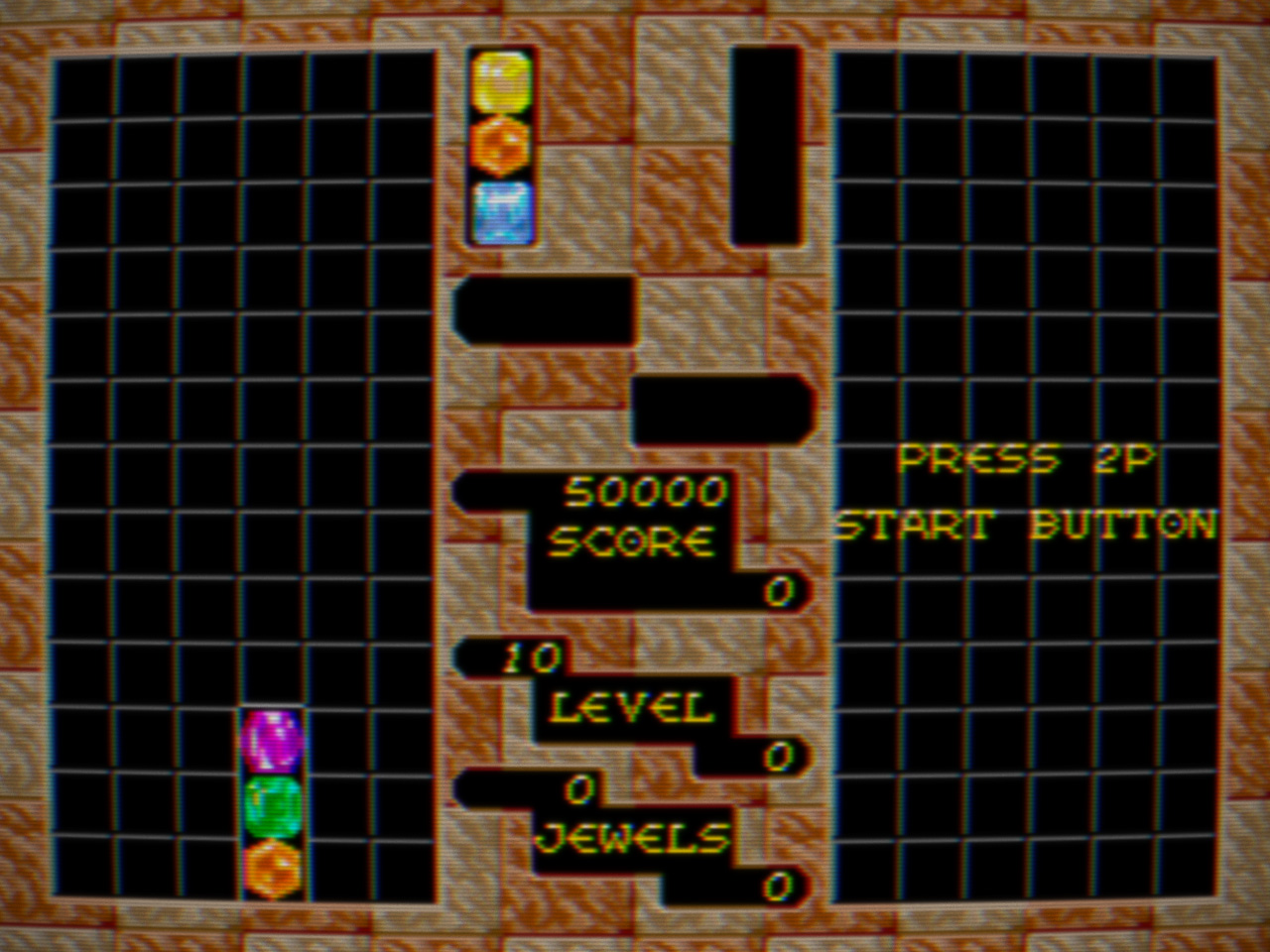
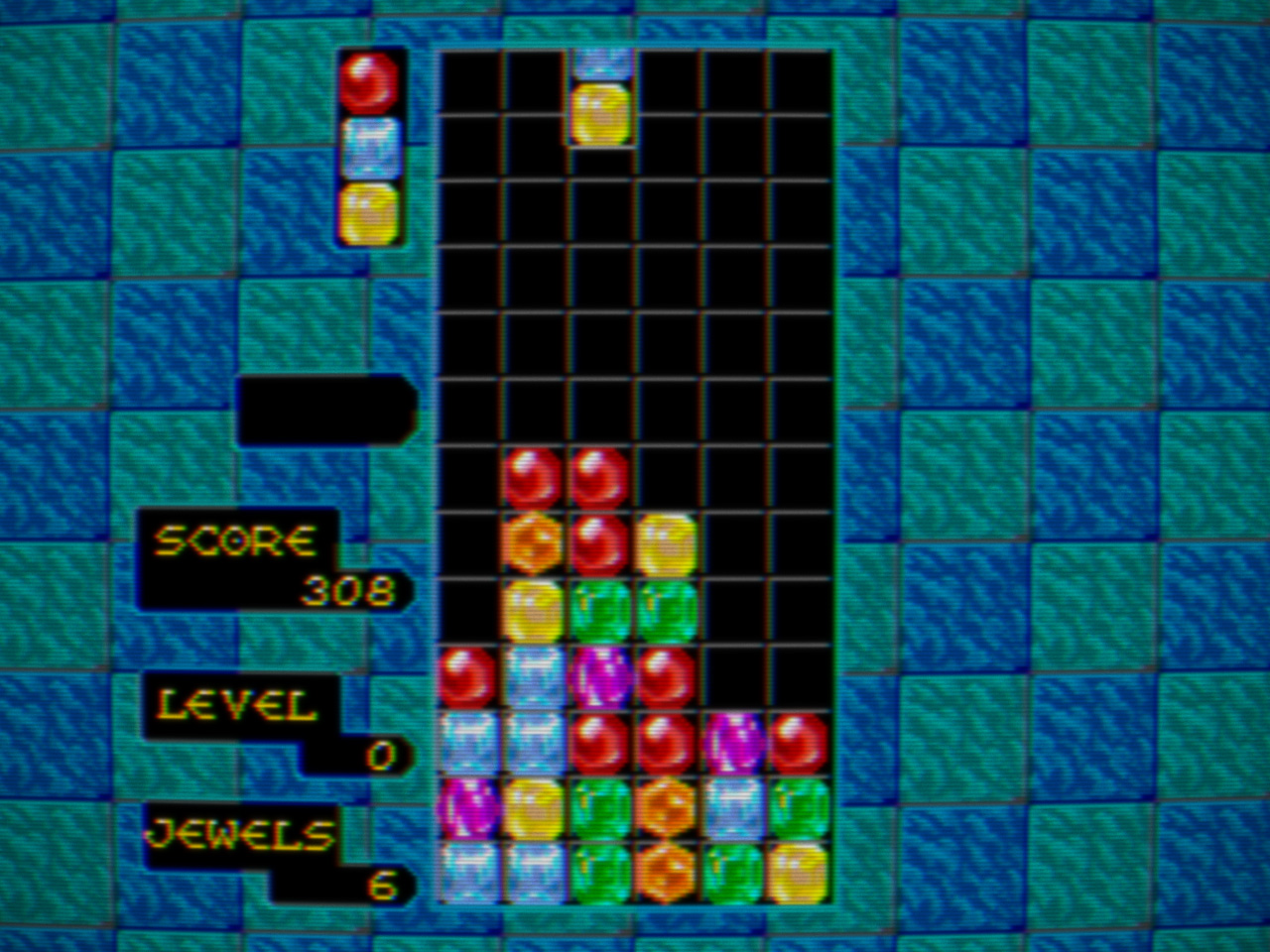
Each piece is a vertical stack of three jewels. You cannot rotate it the way you would a Tetris block. What you can do is cycle the order of the three jewels, top to bottom, as the stack falls, and slide it left or right before it lands. The next stack waits in the corner of the screen, so you always know what is coming.
The aim is to line up three or more jewels of the same colour. Horizontal lines count. Vertical lines count. So do diagonals, and diagonals are where the game gets its teeth, because Tetris has trained your eye to look along rows and the diagonal match is the one you miss. When a line clears, every jewel above it drops to fill the gap, and if that drop lines up another set of three, that clears too. Set up the board so one match triggers the next and the next, and the score climbs fast.
The well is narrow. Let the jewels stack to the top and the game is over.
The magic jewel
Every so often the stack that drops into the well is not three ordinary jewels but a flashing one. This is the magic jewel, and it is the closest Columns comes to a get-out-of-jail card. Wherever it lands, it wipes out every jewel on the board of the colour it touches. Drop it on red in a crowded well and every red jewel vanishes at once and everything above falls into the gaps. With luck, the fall sets off a chain of its own.
The skill is in not wasting it. Dropped on a colour you have only a few of, the magic jewel does next to nothing. Saved for the colour that dominates a pile near the top of the well, it can drag you back from a position that was lost. Reading the board for the right target at speed is one more thing the later levels test.
The squeeze
On the early levels you have time to think. You watch the next stack, turn it over in your head, look for where it fits and drop it with a plan. That calm lasts as long as it takes for the speed to start rising.
As the levels climb, the stacks fall faster. The thinking time shrinks until you are making decisions on reflex, cycling colours while the stack is already halfway down and committing to placements you would have rejected a minute earlier. One bad drop leaves a stray jewel in the wrong column. Two or three leave a jumble of colours with no matches in reach, and the pile starts climbing. Once it gets near the top there is nothing to do but watch.
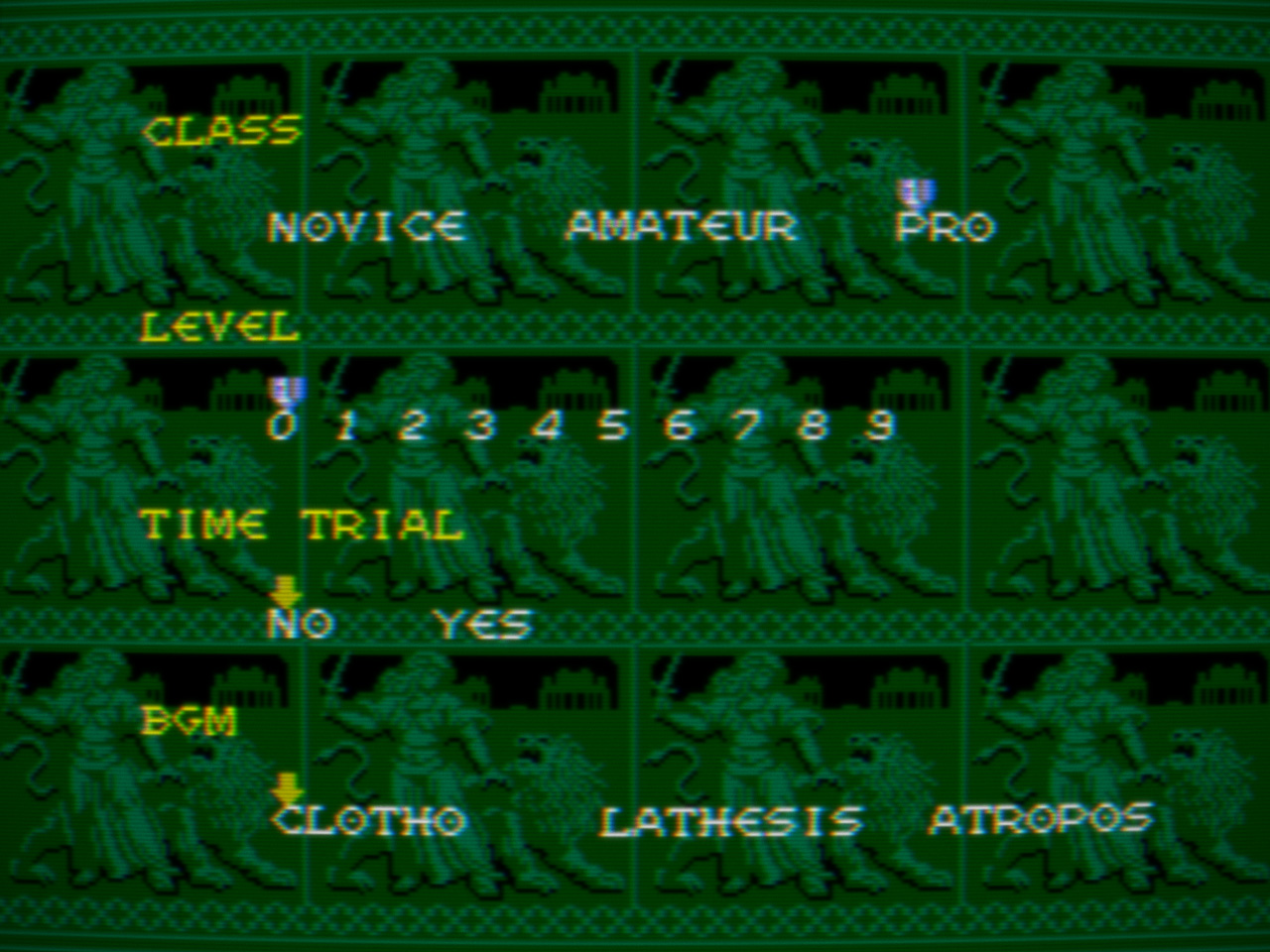
The options let you shape this. There are three classes (Novice, Amateur and Pro), a starting level from 0 to 9 and a time trial mode. A newcomer can start slow and learn the diagonals. An expert can start on level 9 and be in trouble from the first drop.
Versus mode
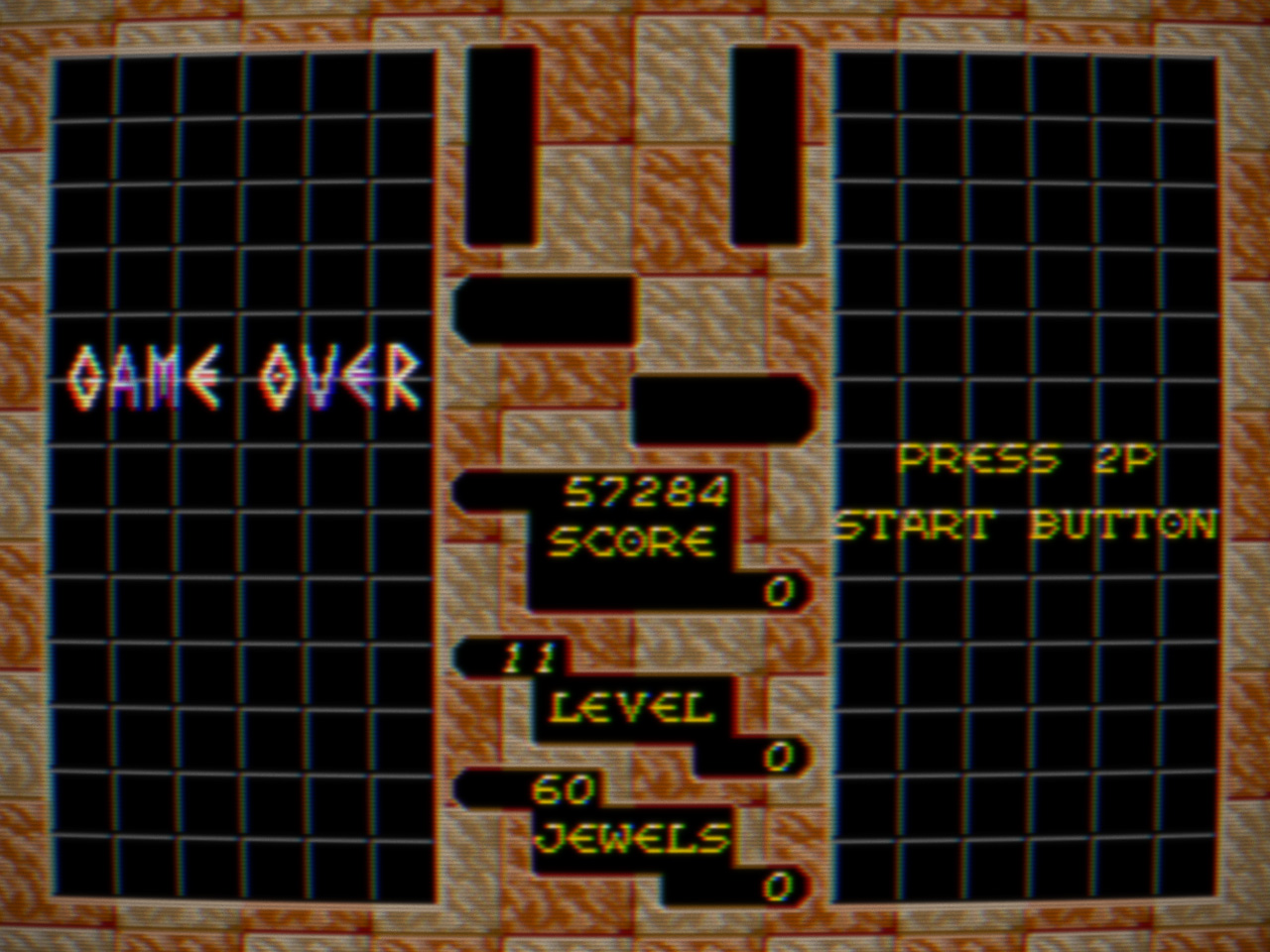
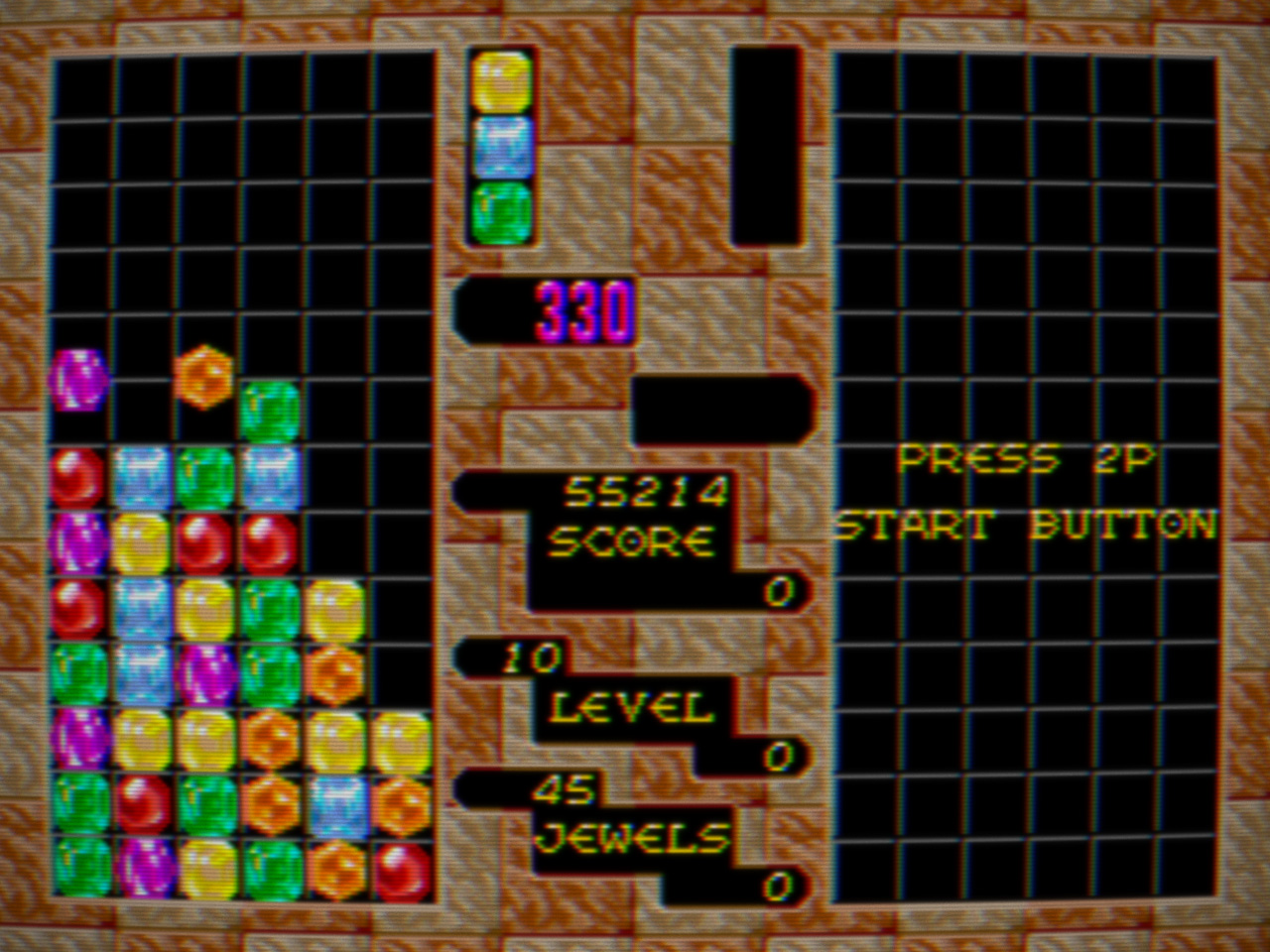
Two-player mode splits the screen and puts two wells side by side, one for you and one for a friend. Each of you works your own well, and the pressure of watching your opponent's pile out of the corner of your eye while your own creeps upward is a fine way to fall out with someone. A solo game of Columns ends when you lose to the speed. A versus game ends when one of you cracks first, and that is a different sort of pressure, because the person on the other pad is less predictable than the falling jewels.
This is the mode that keeps the cartridge in the machine. Chasing a high score has a natural end point, which arrives the day you stop believing you can beat your best. Beating a friend has no end point. As long as there is someone on the other pad who wants a rematch, Columns has a reason to come out at weekends.
Looks and sounds
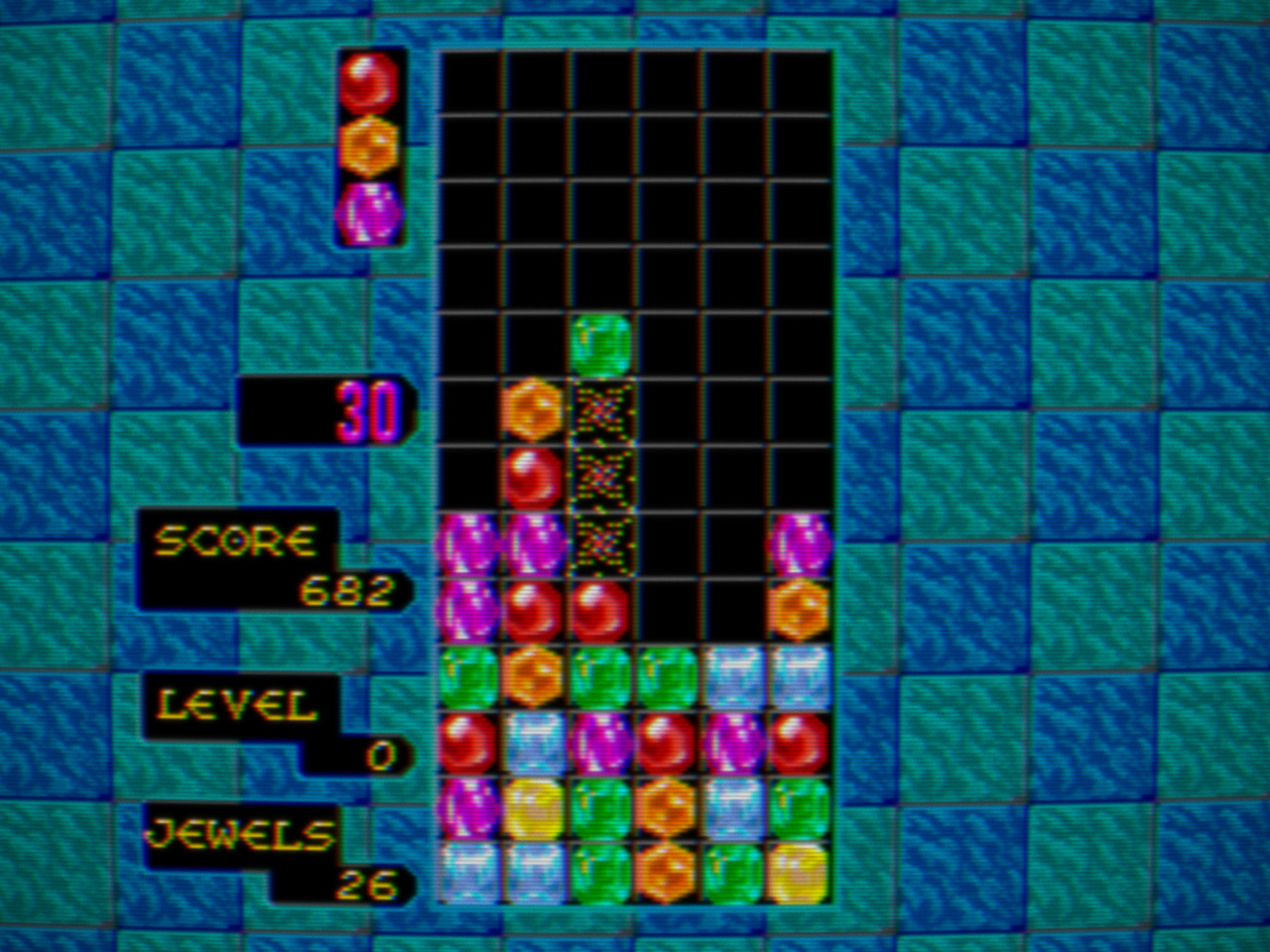
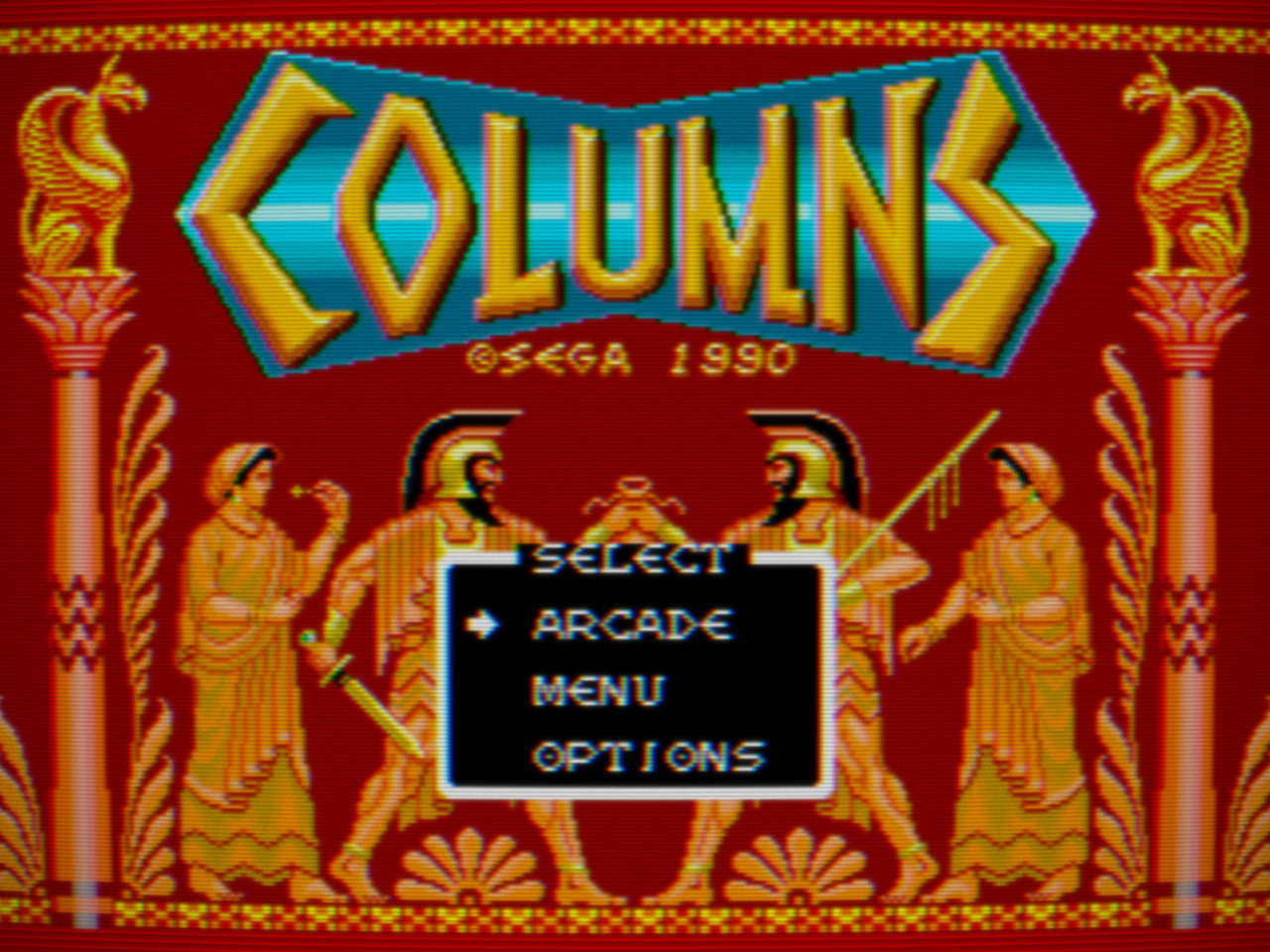
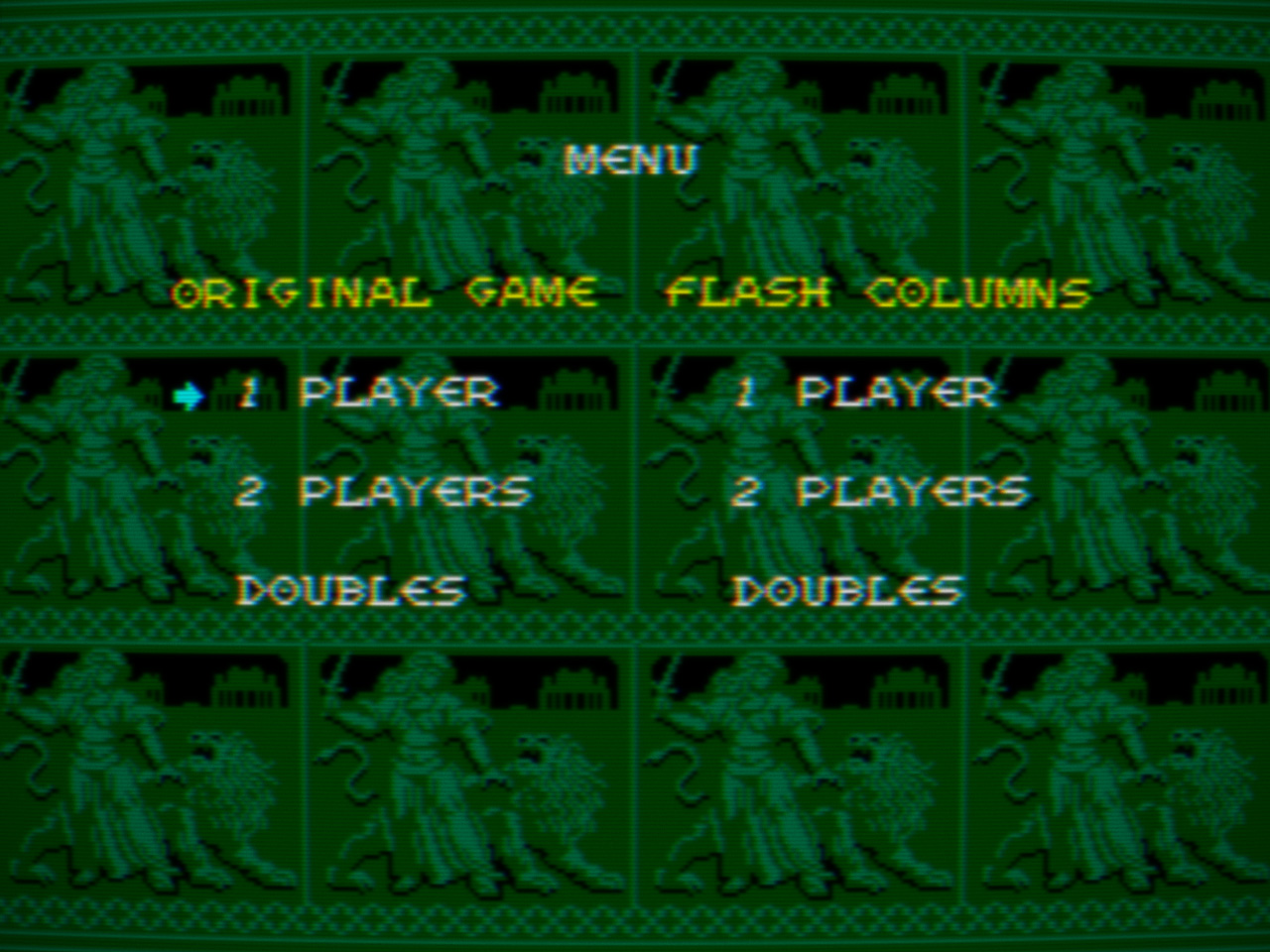
The presentation will not win any awards. The jewels are bright and well defined, the frame around the well is decorated with patterned tiles and the title screen goes for a Greek look with robed figures and pillars. Beyond that there is the well, the jewels and the score. One reviewer compared the graphics to watching wallpaper fade. He has a point, and he is missing one too. A puzzle game needs a clear board, and this board is clear.
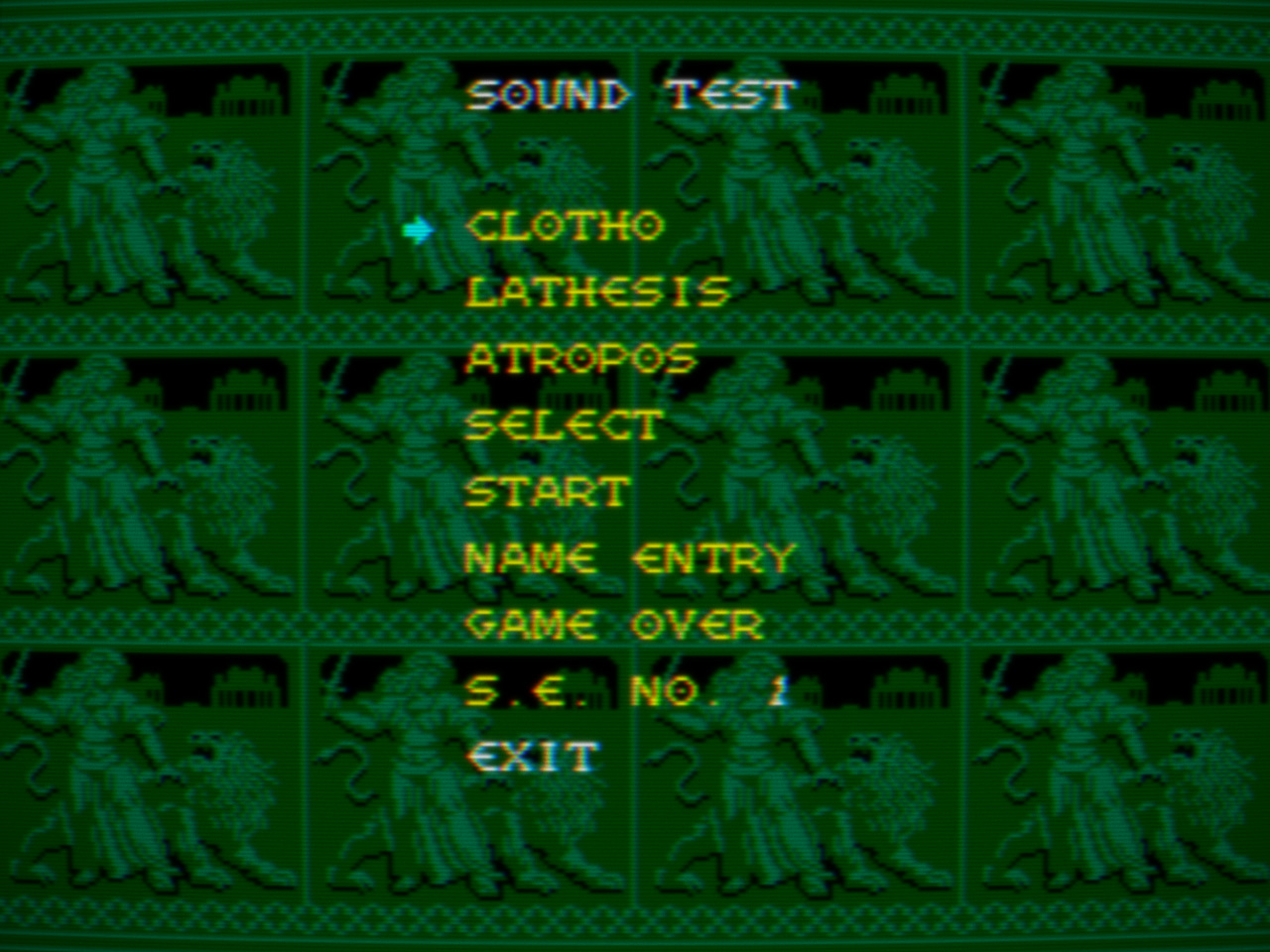
The music divides opinion more sharply. It is by Tokuhiko Uwabo, credited as "Bo", and you choose between three tracks named Clotho, Lathesis and Atropos after the three Fates of Greek myth. They are slow, looping melodies with an eastern flavour that sit underneath the play and refuse to leave your head. Two magazines that have reviewed this cartridge marked the sound at 94 per cent and 40 per cent. Nobody is going to settle that argument here.
The music suits the game. It is calm when the game is calm, and it keeps playing at the same unhurried pace while the well fills and your hands start shaking, which makes the panic worse in the right way.
Who it is for
Columns has no enemies, no bosses and no scenery to explore. Its whole appeal is one rule repeated at rising speed. If falling-block games leave you cold, this will not change your mind, and you should spend your money elsewhere. If you like them, Columns is one of the best reasons to keep a puzzle game in the collection. It is also priced below most Mega Drive releases, which takes some of the sting out of a game that some people will play for a week and others will play for years.
The Verdict
Columns is one of the best puzzle games on the Mega Drive. It takes the Tetris template and swaps rotation for colour matching. Diagonal lines, chain reactions and the magic jewel do the rest, and within a few minutes of play it feels like its own game. Ten minutes teaches you the rules. Months will not exhaust them.
The difficulty options suit beginners and experts alike. The versus mode will keep it in the machine long after the high-score table has stopped moving. The graphics are functional and the music will split a room, and neither matters much once the jewels start falling.
Try before you buy if puzzle games are not your thing. If they are, buy it.
In Hindsight
Columns has aged better than most of its contemporaries because there is so little in it to date. A board, a handful of jewel colours and a rising speed do not look old in the way that scrolling backgrounds and sprite counts do, and the game plays now exactly as it did then.
It did not start at Sega. Columns was created by Jay Geertsen, and Sega built the arcade machine this cartridge converts from his design. A puzzle game created by one person and picked up by one of the biggest arcade companies in the world is an unusual route into the Mega Drive library, and the design survived the journey intact.
Its place in that library is tied to the game it was compared to in every review. Sega produced a Mega Drive version of Tetris, and that version was withdrawn before release because of a dispute over the licence. Very few copies exist, and it is one of the rarest games in existence. Whatever the commercial reasoning, Columns filled the space that Tetris left, and it did so with a game that had its own ideas rather than a copy of someone else's.
The colour-matching rule outlived it. Matching three or more of a colour and building chain reactions became one of the standard templates of the puzzle genre, and games built on it are still being made. Columns was one of the games that set that template, and for many Mega Drive owners it was where the habit began.
Period reviewers never agreed on the music. Scores for sound ran from 94 per cent down to 40, and decades of hindsight have not closed the gap. The disagreement sits in the archive alongside the game, and so does the name of the man who wrote it, which the cartridge kept to two letters.
Magazine scores
- Complete Guide to ConsolesIssue 390%
- Complete Guide to SEGA88%
- Game ZoneIssue 94/6
- Mean Machines SEGAIssue 188%
- Mega Drive Advanced GamingIssue 579%
- Mega Gold90%
- Mega PowerIssue 19/10
- MegaTechIssue 188%
- SEGA PowerIssue 2082%
- SEGA ProIssue 290%
- SEGA Pro - The A-Z of SEGA Games84%
- SEGA ZoneIssue 1687%